On February 28, 2026, the U.S. joined Israel to launch air strikes on Iran. It might not be immediately obvious that a war across the globe would have an impact on U.S. farmers. But it has, adding significantly to the stress farmers were already feeling due to low prices, rising input costs, tariffs, lost markets and other issues. How can that be? Because in reaction to the attacks, Iran closed the Strait of Hormuz, bringing traffic to a standstill in one of the world’s busiest oil and fertilizer shipping channels.
Most farms rely on those two products—fuel (derived from oil) and fertilizer—and almost immediately after the first strikes on Iran, the prices for these products rose precipitously. As weeks went by and the conflict spread to other countries in the Gulf Region, what was intended to be a short conflict dragged on and farmers took a big financial hit. The war began right at planting season, the time for fertilizer to go in the ground along with seeds for crops. Farmers who had not pre-purchased their fertilizer scrambled to find supplies and paid significantly more than they budgeted for it. Those who couldn’t afford the extra cost, had to make due with what they could afford and access, which will impact their eventual harvest.
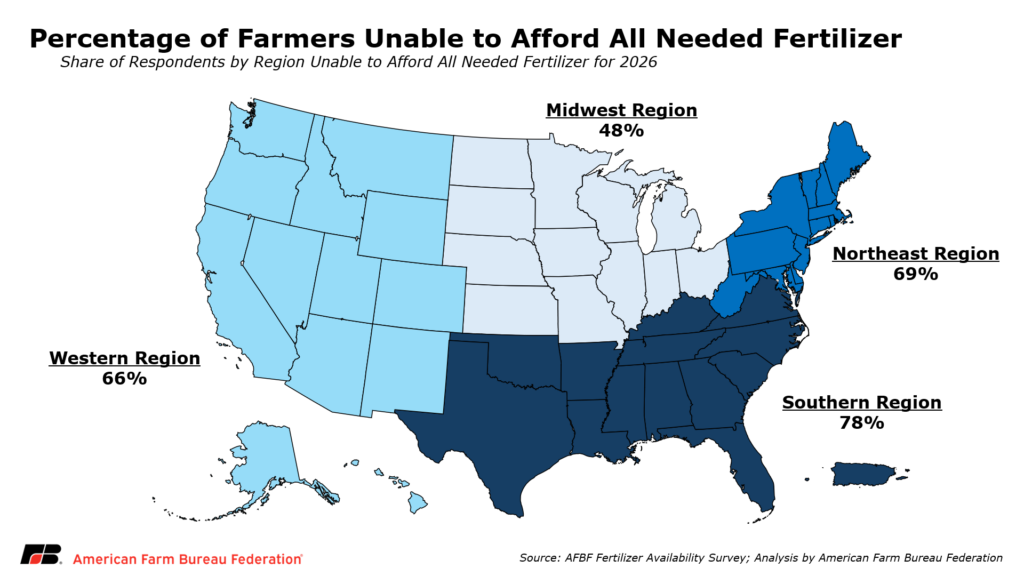
While the USDA downplayed the war’s impact on farmers, Farm Bureau released results of a survey of farmers conducted in early April 2026, finding that 70% of farmers surveyed could not afford to purchase all the fertilizer they needed for planting. Depending on the type of fertilizer, costs have risen by as much as 25% since the Middle East conflict began.
Farmers also felt the pain from another essential input suddenly getting more expensive: fuel. Like everyone else, farmers watched as the cost of fuel increased sharply, making it more expensive to run the equipment they rely on to plant, nurture and harvest crops. Global crude oil prices, which are the foundation for diesel and gasoline, jumped about 30% since late February, driving the cost of diesel, the most commonly used fuel on farms, up more than 40% since February.
It was a relief for farmers when a cease fire was finally agreed to on June 14, ending hostilities, reopening the Strait of Hormuz and lifting an American naval blockade on ships traveling to and from Iranian ports. Shortly after, prices for both fuel and fertilizer began to level off, though farm economists were clear that even as prices dropped, the impact on farmers would remain.
But any relief that farmers felt at the announcement of a ceasefire was quickly lost as the unstable peace again and again came into doubt. This week hope for a lasting resolution suffered a fatal blow, with President Trump formally notifying Congress that the nation is once again at war with Iran. This notice gives his administration another 60-day clock to use the military in the region without congressional approval. As a result, farmers are once again in the same position they were: dealing with rising costs and potentially limited supply for two of the major inputs they need not just to plant, sustain and harvest their products, but to get them to market as well. As with all the challenges farmers face, this situation will likely keep changing. We’ll keep you posted.
On a positive note, the turmoil with the fertilizer industry has many farmers thinking about how they can protect themselves from these kinds of supply-chain disruptions in the future and looking for other ways to replenish their soil, such as manure, compost and cover crops. Farm Aid’s partner Land Stewardship Project launched a new effort called Rethink Nitrogen, which helps farmers understand how they can be productive and profitable while also protecting our water, soil and health from the dangers of over-application of fertilizer. You can read more about it here.
Tracking the Farm Economy in Crisis
When it comes to the farm economy, there’s a lot to cover. For updates on how farmers are faring, check out this post for updates from economists, policymakers and the folks on the ground who experience these challenges directly: farmers.