Our new podcast series!
 Listen to the Artists and Activism series of Against the Grain: The Farm Aid Podcast to hear from more than two dozen artists who use their art and voices as vehicles for political engagement and expression on issues that matter to them.
Listen here!
Listen to the Artists and Activism series of Against the Grain: The Farm Aid Podcast to hear from more than two dozen artists who use their art and voices as vehicles for political engagement and expression on issues that matter to them.
Listen here! 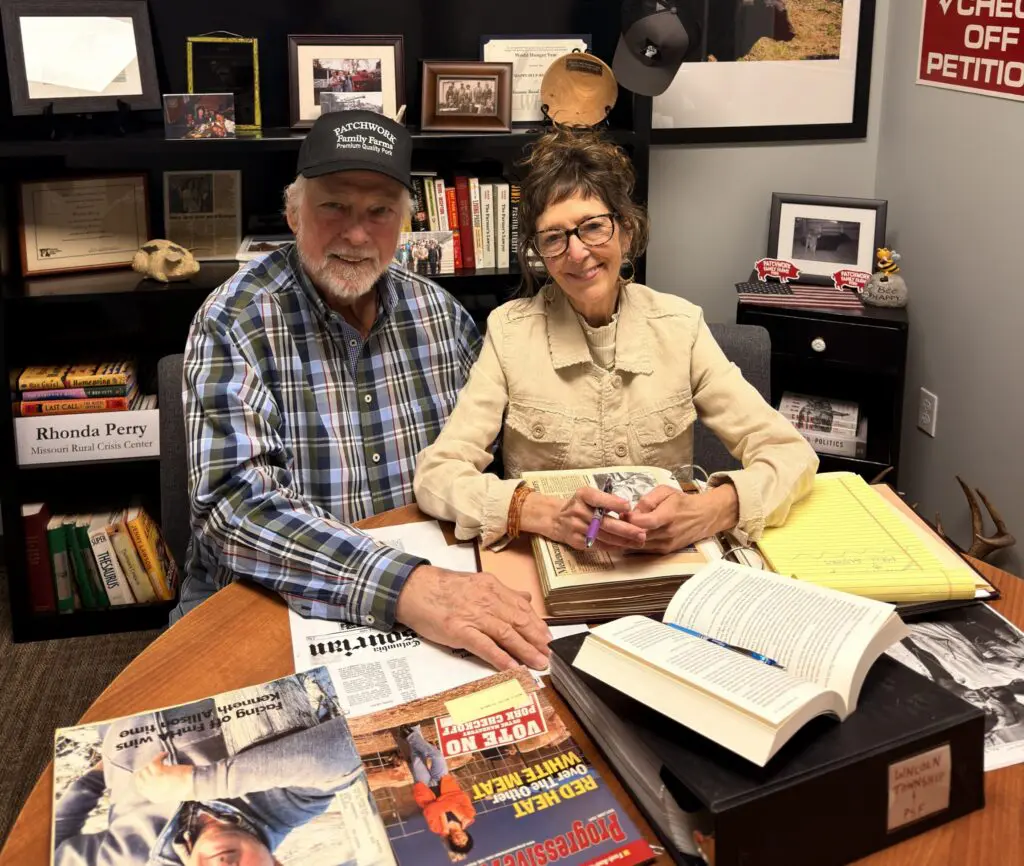
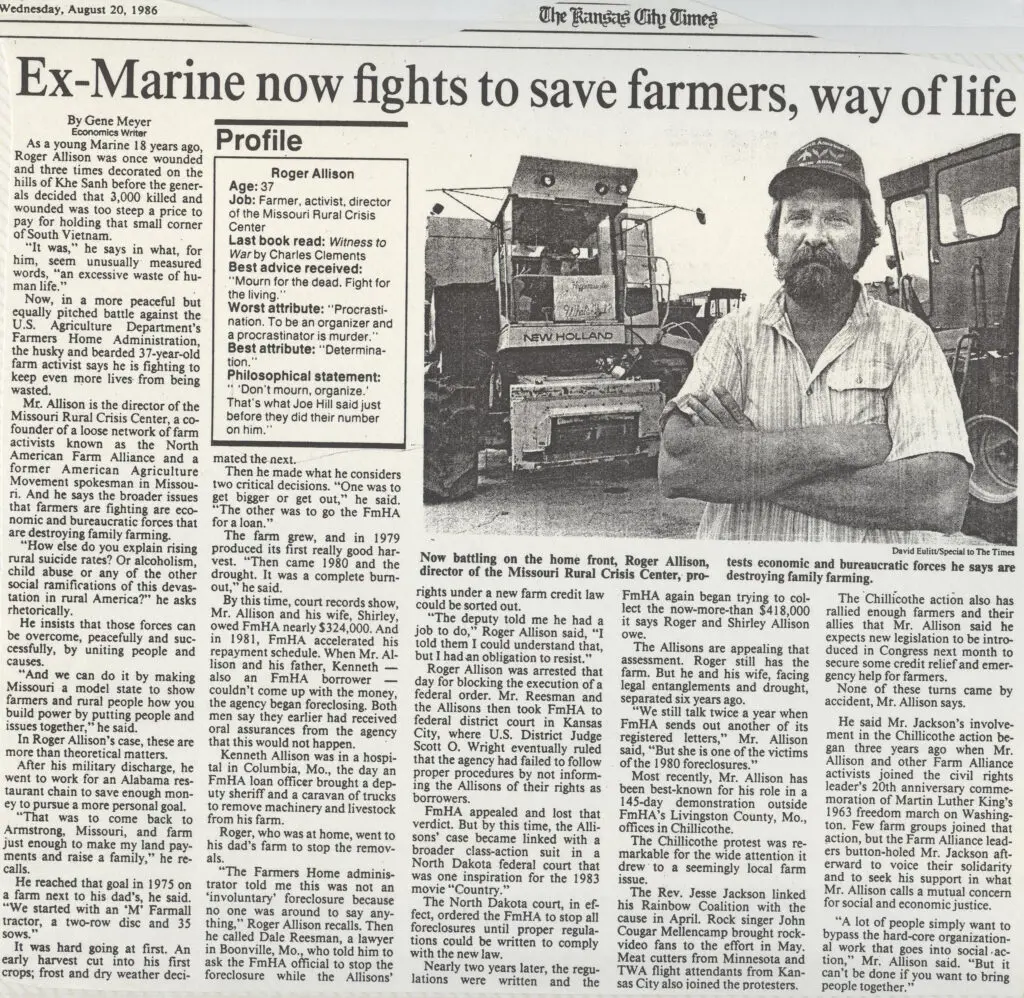
Rhonda Perry and Roger Allison
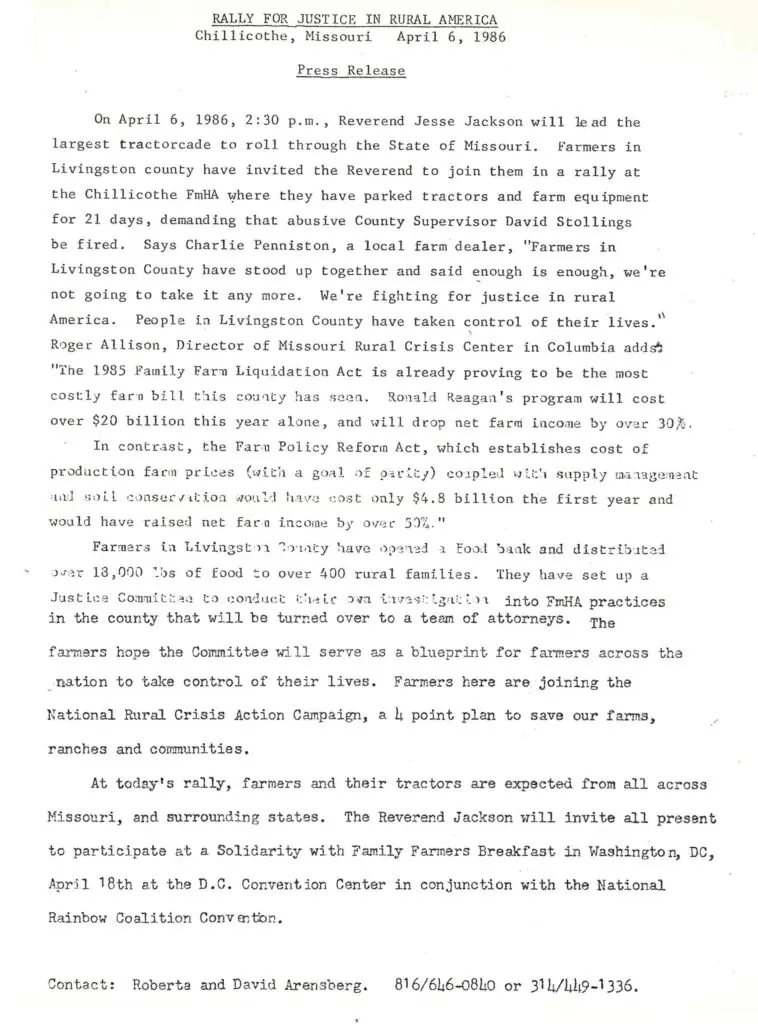
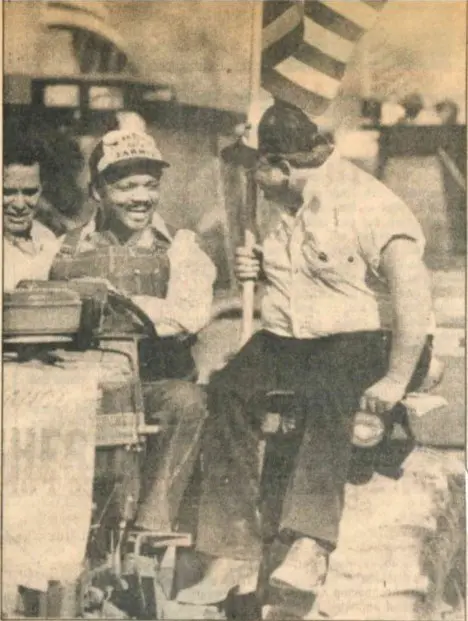
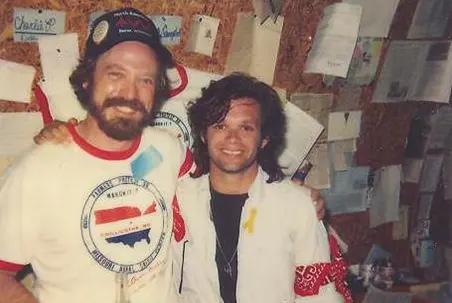
Roger Allison founded the Missouri Rural Crisis Center (MRCC) in 1985, creating the infrastructure and organizational home to continue building power to fight illegal foreclosures of family farms during the 1980s Farm Crisis. Throughout those harrowing days, Roger was a fierce advocate not just for his fellow farmers but also for racial and social justice, as he helped build the movement. Rhonda first came across Roger and MRCC at a farmer’s protest in 1986. A few years later, in 1991, she attended the MRCC annual meeting with her parents, where she spoke with Roger and decided this was her forever calling. Fun fact: Rhonda’s parents were founding MRCC members, and later became some of the first Patchwork Family Farms hog producers. As a 5th-generation farmer coming to the work through her own family’s fight to stay on their land, Rhonda was inspired by the courage of her fellow rural people organizing for their farms, families and communities at the 1991 annual meeting and soon after joined MRCC’s staff. She began her MRCC journey as the Program Director, fundraising to pay for her own position, and eventually became the Executive Director in 2020. Over the last 35 years, she has helped carry the movement forward with grit, compassion and unshakable commitment to family farms and rural America. And Roger continues to play an integral role as the Director of Operations, overseeing processors, producers and the Patchwork Family Farms team.
Being farmer-led isn’t the only thing that makes MRCC so special. It has always been important to MRCC to not only fight for the policies that will provide farmers a fair price, create access to markets, and strengthen rural communities, but to also consistently challenge the industrialization of agriculture by providing on-the-ground examples like Patchwork Family Farms, showing what can happen when farmers and consumers come together.
Patchwork Family Farms Pork was created in 1993 to support local hog farmers and bring high-quality, sustainably-raised, independent family farm pork to all consumers regardless of income or zip code. Patchwork promotes sustainable agriculture and animal husbandry practices, provides hog farmers with fair market prices, and provides accessible local food (since way before it was called “local food”). Patchwork buys from Missouri producers and works with independent processors to get thousands of pounds of family farm pork to consumers, grocery stores and restaurants. In fact, for more than 25 years Farm Aid concertgoers have been able to experience Patchwork pork chops, ham steaks and brats at every Farm Aid concert across the country.
Together, Rhonda and Roger have nurtured a powerful team of leaders at MRCC who bring a strong sense of community, connection and purpose to everything they do, whether they’re organizing farmers, building relationships across rural and urban communities, or protecting our land, water and food supply. Outside of co-running the organization, Rhonda and Roger co-run life on the farm. They merged their cattle herds—and got married—in 1996 and continue to run their cow/calf operation on 850 acres in Howard County, Missouri. In addition to their cows, they also enjoy fishing, recording nature and the farm through photos, and taking care of their collection of other animals, who have come to live on the farm, including three dogs, two horses and nine cats.
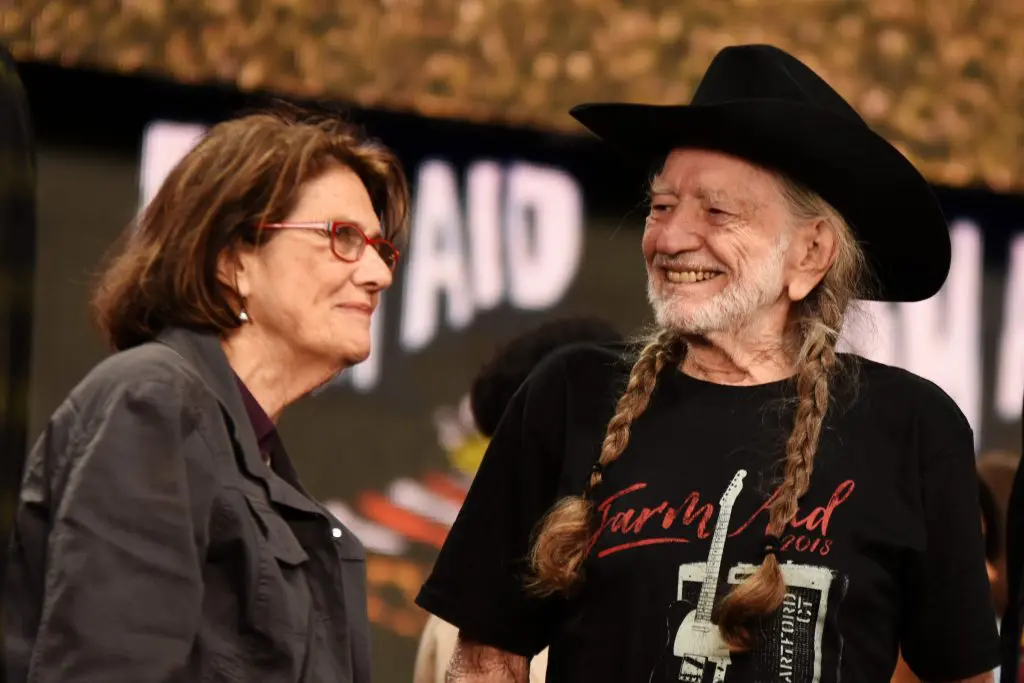
Carolyn Mugar and Willie Nelson on the Farm Aid 2018 Press Event stage. Photo © Brian Bruner / Bruner Photo
Carolyn Mugar
Farm Aid’s first executive director Carolyn Mugar has an extensive resume of socially-conscious experience. The social and political issues she’s tackled include labor, environment, toxics, literacy and community empowerment. Prior to her work with Farm Aid, Carolyn was a union organizer with the Oil, Chemical and Atomic Workers International Union and the Amalgamated Clothing and Textile Workers International Union. In 1985, Willie Nelson asked her to help determine how the funds raised from the first Farm Aid concert should be distributed. Carolyn traveled across the countryside to visit the families who were being pushed off their land. She says she had always wondered what held the two coasts together, and that she learned a lot about that while visiting farm families at their kitchen tables. Carolyn served as Farm Aid’s executive director for 39 years, through 2024, and remains active with the organization to this day.
In addition to her work at Farm Aid, Carolyn founded The Armenia Tree Project, a reforestation project based in Massachusetts and Yerevan, Armenia. As a person of Armenian descent, she is deeply involved in issues impacting Armenians and travels there several times a year. Over the past 30 years, the Armenia Tree Project has planted more than 9 million trees and shrubs in forests, school yards and sites of cultural significance, removing an estimated 100,000 tons of CO2 annually.
 John Mellencamp
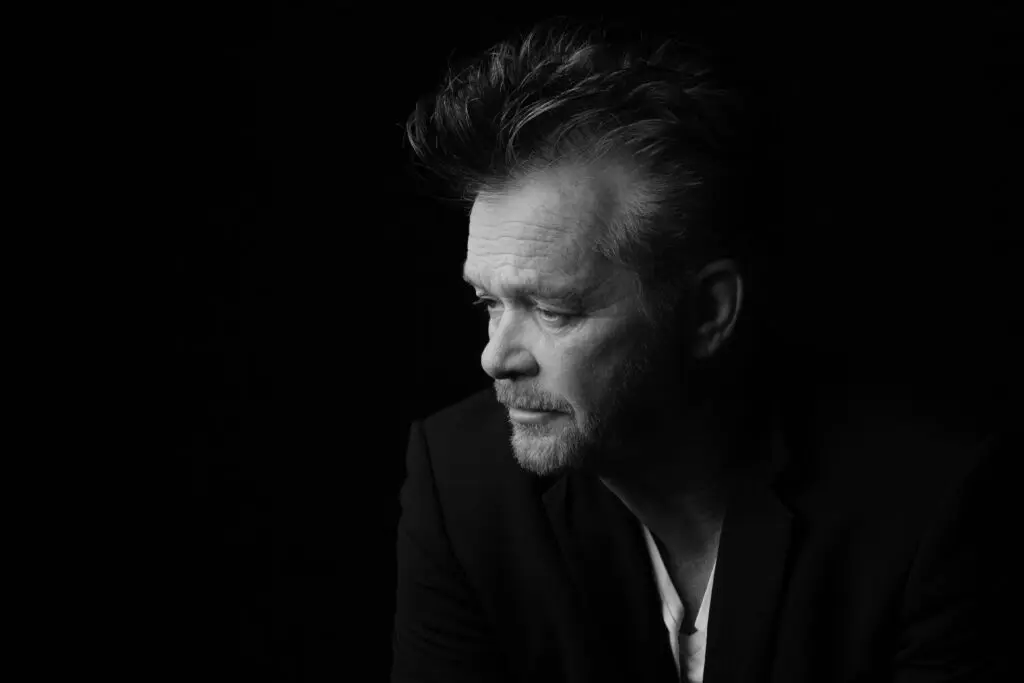 John Mellencamp
John Mellencamp is one of the most highly respected singer/songwriters of his generation. In recognition of his achievements in a music career that now spans more than 50 years, Mellencamp is a member of the Rock and Roll and Songwriters Halls of Fame, a recipient of the John Steinbeck Award, ASCAP Foundation’s Champion Award, The Woody Guthrie Award, the Americana Music Association’s Lifetime Achievement Award and most recently, the Founders Award, the top honor assigned by the American Society of Composers, Authors and Publishers. He is also one of the most successful live concert performers in the world.
In 1985, Mellencamp, together with Willie Nelson and Neil Young, founded Farm Aid. The social activism reflected in his songs helped catalyze Farm Aid, the concert series and organization that has addressed the struggle of American family farmers for more than 40 years.
In recent years, John has continued to focus on another facet of his artistic expression: painting. His style has progressed over the years as evidenced by several gallery shows and published portfolios, and he has increased his output by completing over 150 new works. A self-curated book of Mellencamp’s work, John Mellencamp: Paintings and Assemblages, is out now via Rizzoli New York.
Legends of Rock: John Mellencamp, a permanent exhibition at the Rock & Roll Hall of Fame, opened in fall 2022. There, Mellencamp confirmed his massive “Live and In Person 2023” tour which sold out across the US and included four nights at New York City’s Beacon Theater. The tour continued with “Live and In Person 2024,” which saw John performing for one night only in 27 new cities.
A reissue of his seminal album Scarecrow is out now to critical praise, and features a wealth of bonus tracks, rarities and more.
Mellencamp continues his journey as the walking embodiment of rock icon: passionate, plain- spoken and a self-proclaimed rebel. John Mellencamp continues to live and work in Bloomington, Indiana.
Rhonda Perry and Roger Allison’s note to John Mellencamp
Chillicothe 40 Years Later Part Two
FOLEY: Welcome back to Against the Grain, the Farm Aid podcast, where we’re marking the 40th anniversary of the blockade of the Farmers’ Home Administration offices in Chillicothe, Missouri. This is part two of the series. If you haven’t heard part one, check it out. I’m Michael Stewart Foley.
KURN: And I’m Jessica Ilyse Kurn. The events that took place over this 145 day protest in 1986 shifted the farm movement and lit a fire for folks coming together to stand up for their rights.
FOLEY: This protest was organized primarily by the Missouri Rural Crisis Center, led by farmer hero Roger Allison, who we heard from along with Rhonda Perry, MRCC’s executive director. We also heard from Carolyn Mugar, Farm Aid’s first executive director. Part one left off with Farm Aid board artist and founder John Mellencamp, telling us what led him to Chillicothe.
KURN: While a call from Carolyn got him to the protest in 1986, John’s commitment to the American farmer started in his childhood days, growing up in rural Indiana.
MELLENCAMP: Here’s what I noticed. I noticed that all of the small towns around here were going out of business. Like when I was in in high school, all of these small farms, I mean all these small towns like Freetown, Brownstown, North Vernon, Salem, all of these small towns were thriving towns. And as it moved into the 70s, uh, these towns were dwindling, and I couldn’t figure out why. Why is this happening? And, uh, after all these years, my observation was about three or fourfold. One was that the small family farmer was, was, uh, being edged out by corporate farming. 2) cars: cars and highways, which were built by the government, bypassed all of these small towns. And 3) young people did not want to work on the farm. So those are the 3 things that, uh, my observation has taken me to and then the, the last observation is the government: and the government has not been playing inside baseball with farmers for years. So that really is, in my opinion, the biggest problem with the farm situation in 1985 and in 2025. Still, still the same.
KURN: From growing up in Indiana to seeing the country through his tour bus window, John, like lots of artists, got a sense of people’s lives in a way most of us will never experience.
FOLEY: He put his observations to work in the video for Rain on the Scarecrow. In the MTV era, this video brought the farm crisis to millions of Americans’ homes in a way that had never been done before, in part because it starts with 3 farmers explaining the challenges they face. Go check it out on our webpage, FarmAid.org/podcast. And it’s worth flipping through the comments underneath the YouTube video too, to check out all the reactions from farmers, eaters, people who were there – from years ago to right up to this past week.
Farmer 1: I think the politicians are playing games with us, you know, it don’t cost them anything to change the rule, you know?
Farmer 2: All they want is cheap food, which I can see that, but they don’t take the farmer into consideration at all.
Farmer 1: Just sick of working 10 or 12 hours a day or more and just breaking even if you’re lucky, if you’re real good,
Farmer 2: You want to buy a farm?
MELLENCAMP: That’s my brother-in-law and his brother, and I think, uh, his other brother. So, uh, my sister lived on – and still does – lives on a, a, a farm and, uh, they were raising at the time hogs. However, again, the government was not in the corner of those people, and they were told the way to clean up the, uh, sewage that the hogs left was to spray it with this stuff, uh, with this chemical stuff. And both my sister and her daughter both got cancer because they lived right in the middle of it. And, of course, now this stuff is outlawed. But both of them survived, but it was because they lived in the middle of the hog farm and the spray that they were spraying gave them both cancer.
MELLENCAMP: George Green and I went to high school together and grew up together, and we, he, him and I wrote, wrote Scarecrow. It really just started by a conversation like, what the hell is going on? You know, why, why are these places disappearing? And it was through that conversation that we co-wrote that song.
FOLEY: That Rain on the Scarecrow video is so powerful, in part because it shows real people, not only John’s extended family, but others in that Indiana community that could have been Chillicothe or any number of rural towns facing extinction during the farm crisis.
KURN: Yeah, the scenes with farm auctions and crosses in the churchyard were really moving.
FOLEY: Yeah, what did you think when you saw all of that?
KURN: Well, I didn’t see it originally because I was a baby at that time.
FOLEY: Uh, I was not a baby. I remember watching it on video, uh, many times over and over again because like all videos in the MTV era, it was played 5, 10 more times per day. So it got massive amplification out across the airwaves to the whole American public, or at least the young people watching MTV in those days.
MELLENCAMP: Matter of fact, I knew quite a few people who, I don’t know if they were so much foreclosed on as they just threw their hands up and said, I, we, we can’t do this anymore. Which, you know, all the things that I mentioned before – the government, the highway system, all of that stuff – all played into it. I knew a lot of guys and and girls that were in FFA, you know, and, uh, it was a different time. Uh, farming actually, when I was younger, uh, looked like a viable way of making a living and, uh, most people as you well know, you know, inherited the farms, you know, generation to generation. And then when it came time to lose the farms, it was heartbreaking for them to think that their grandparents or great grandparents grew up here and now they’re gonna lose it. And they kind of blamed themselves when in reality, there was not much they could do about it.
FOLEY: The Scarecrow album came out on July 31st, 1985, just two weeks after Bob Dylan commented from the stage at Live Aid, that maybe some of the funds raised by the concert could be used to help American farmers pay their loans. When Willie Nelson started organizing the first Farm Aid concert, he heard about Scarecrow and called John.
MELLENCAMP: I think that Willie and me and Neil were all young enough and naive enough to think that we would do this concert and would bring attention because, you know, back then, there were a lot of these concerts going on, you know. Most of them were just bullshit, you know? The one that I remember asking to play at was the one to save the, uh, Statue of Liberty sponsored by Coca-Cola! We were naive enough to believe that our voices would be heard by the government and they’d go, oh, they’re making a good point.
KURN: Your donation to Farm Aid strengthens family farmers so they can thrive and keeps them on the land where they belong. Together, we can make a real difference in our farm and food system. Head to Farmaid.org/podcast to make a gift today.
KURN: In part one of this two-part series, we ended right after Carolyn Mugar, Farm Aid’s first executive director, got on the phone and asked John to come to Chillicothe, and John didn’t hesitate to hop on a plane and join the blockade.
MELLENCAMP: Well, the first thing was we took a really small airplane from Bloomington to Chillicothe, and the flight over there wasn’t so bad, but the flight back was horrible because we got caught in it. And I mean, this was a little plane. It held 6 people and it was a 1 propeller thing. And I remember getting off the plane and all of us having to lay down because we were so sick. It was just like the worst, the worst fair ride or carnival ride you ever, you know – down and up and sideways and it was just like, oh my God, um. But I don’t really think that’s what you’re asking me about!
FOLEY: It’s interesting though.
KURN: Nice that he can laugh about it now, but that sounds really terrifying.
FOLEY: Seriously, and you wouldn’t necessarily know it from the photos and videos of that day, which seemed like a perfectly sunny spring day.
KURN: If you want to check out John’s full performance, head to Farmaid.org/podcast. But for now, let’s let Rhonda Perry paint a picture of the scene.
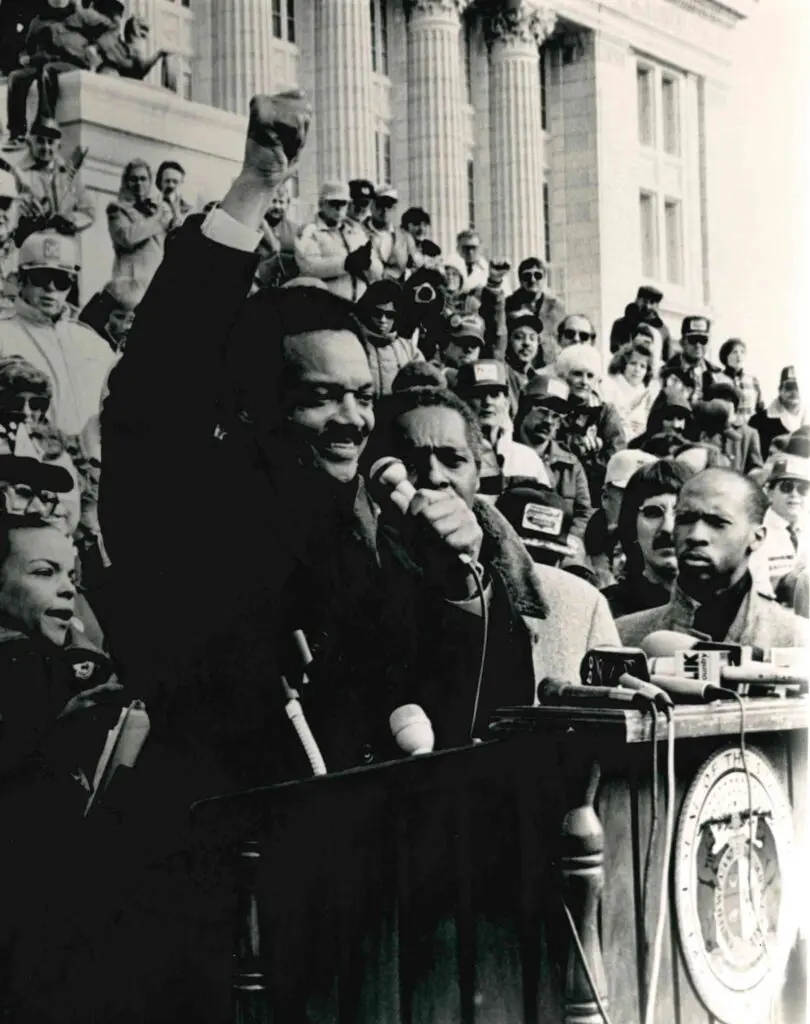
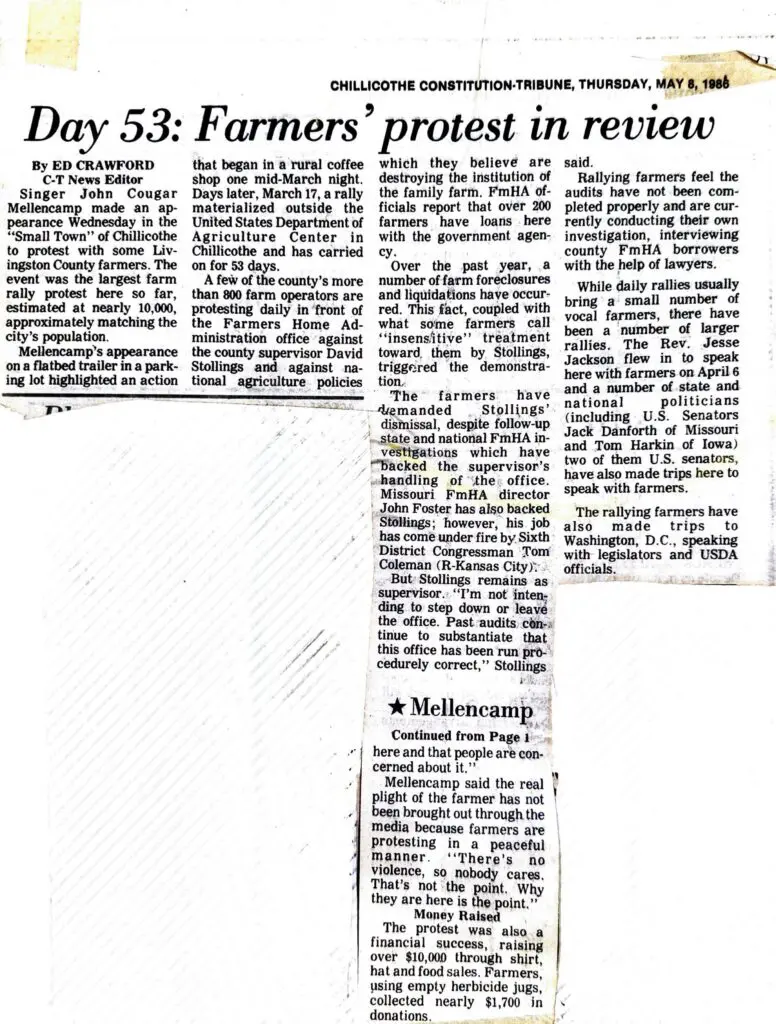
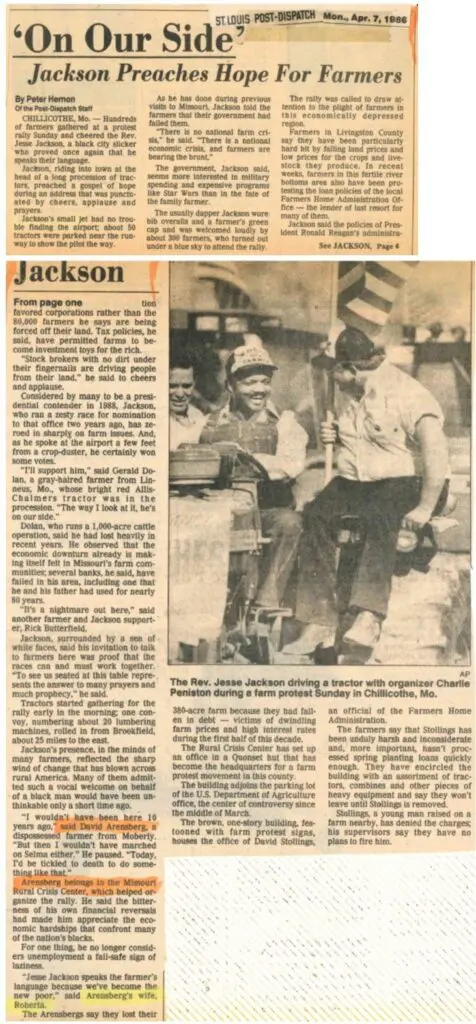
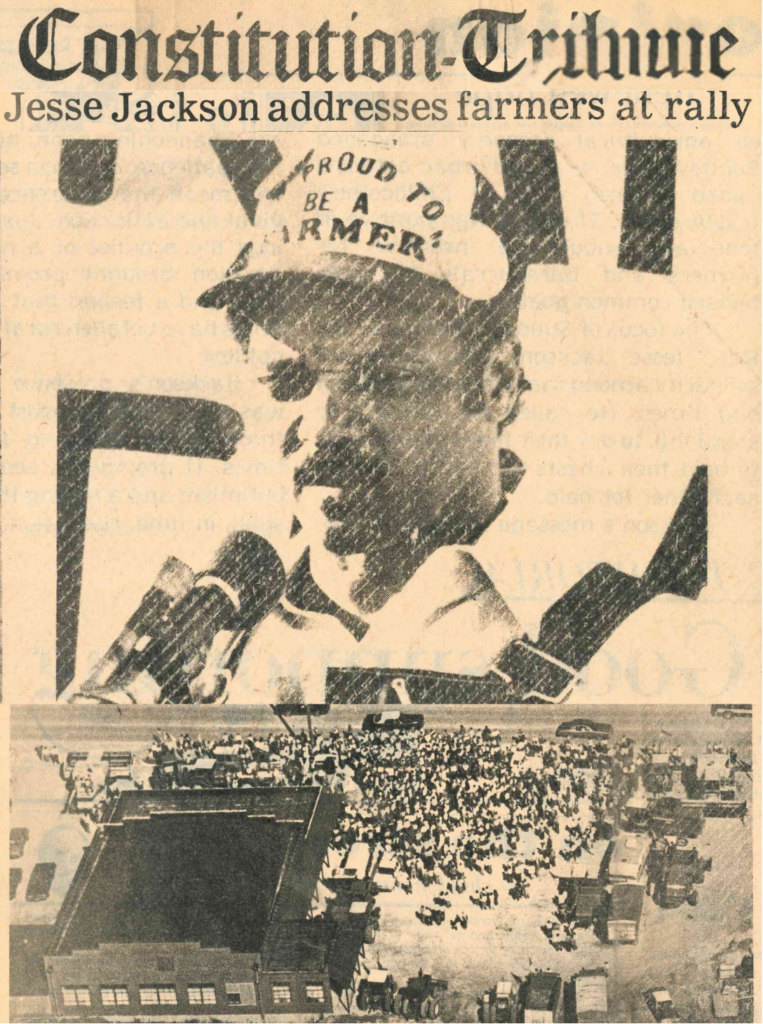
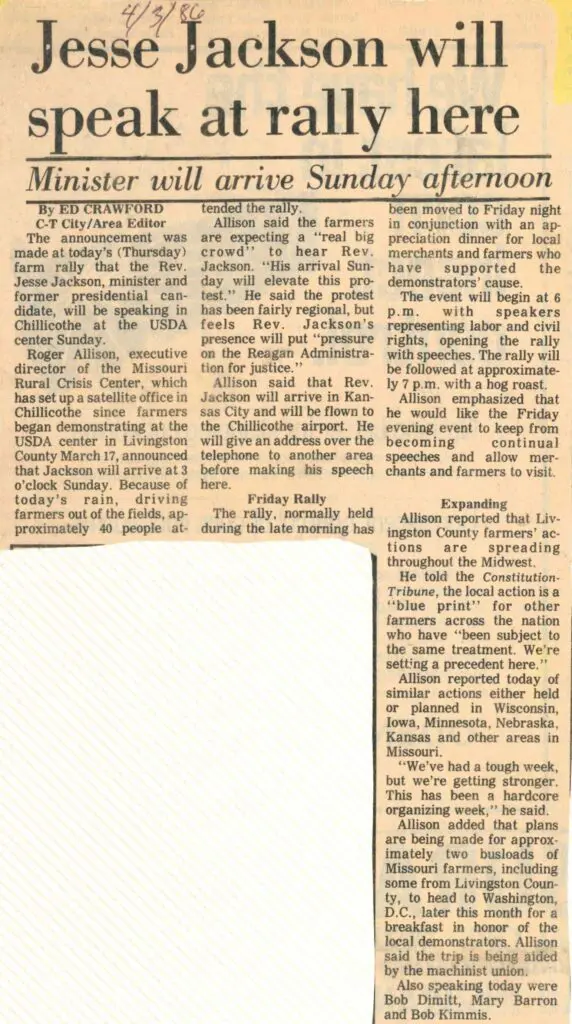
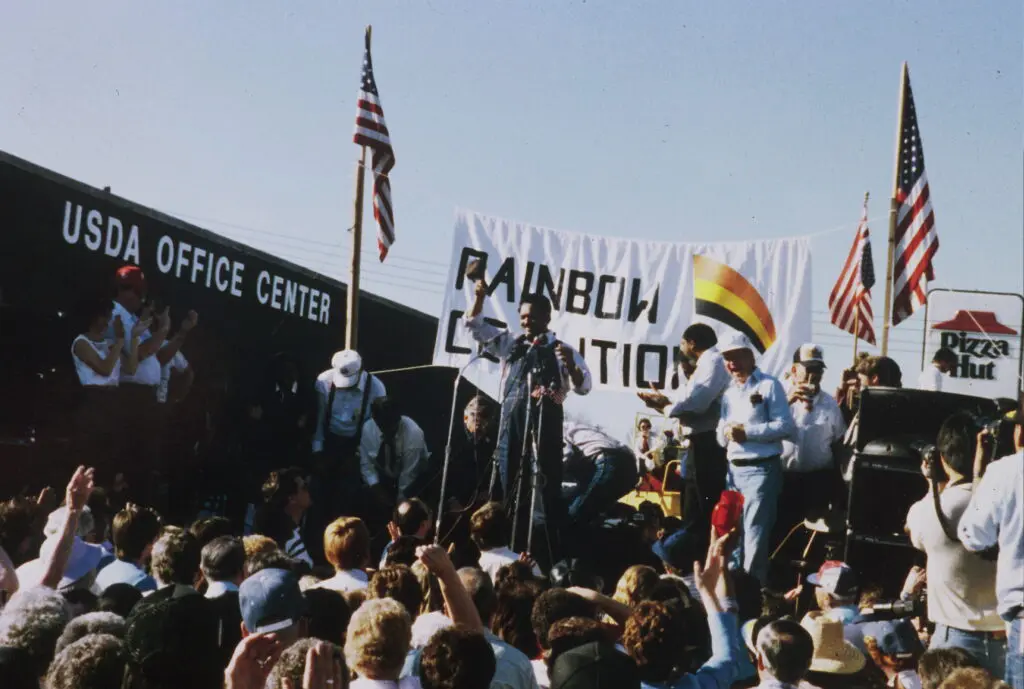
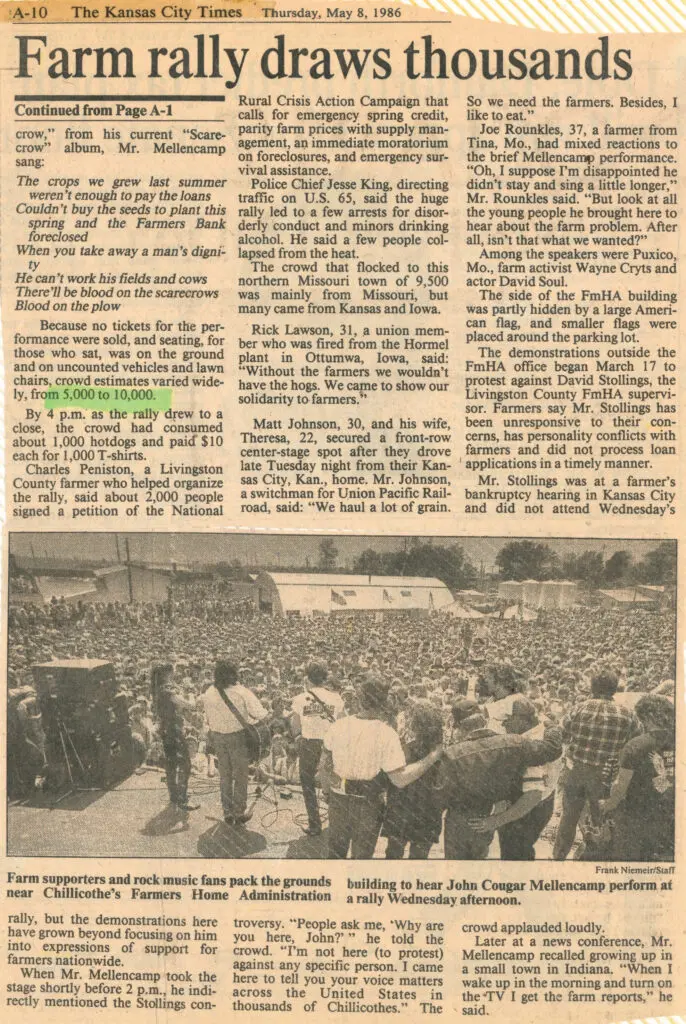
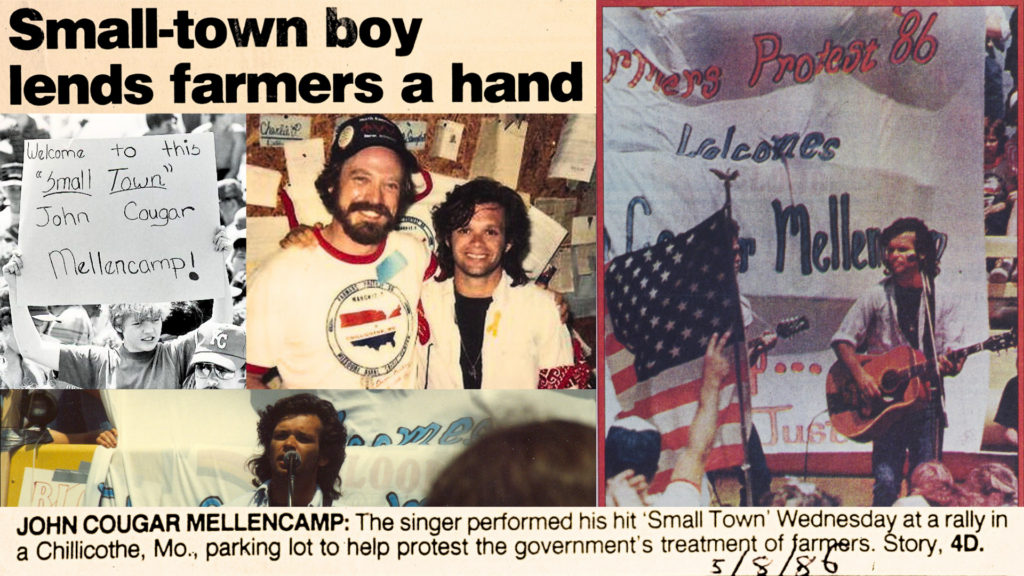
PERRY: I mean, 10,000 people showed up and the whole town didn’t even have 10,000 people in it. And the speakers were all before Mellencamp, and it included an opportunity to highlight building these bridges and relationships. So it was the Reverend Fuzzy Thompson, who was the head of the Southern Christian Leadership Conference. It was the UAW, it was Bobbi Polzine. It was Wayne Cryts who was running for Congress, a farmer from Southeast Missouri, and Roger was facilitating all the different speakers and the event.
FOLEY: To clarify, the incredible range of activist voices turning out to support these farmers included other farm organizers like Wayne Cryts, who was part of the American Agriculture Movement, and Bobbi Polzine, who as a member of Minnesota Groundswell had spoken from the stage of the very first Farm Aid.
KURN: Labor union members from the United Auto Workers, United Food and Commercial Workers, and even the flight attendants union all showed up to speak that day. Civil rights activists were there too. People like Fuzzy Thompson, who led the Kansas City branch of Martin Luther King’s organization, the Southern Christian Leadership Conference.
FOLEY: Carolyn Mugar reminds us that the influence of the civil rights movement is very much part of the farm movement’s DNA.
MUGAR: You credit the civil rights movement with that because with, with knowing that how important it is to show up for other people trying to create the same power – and so they knew what it was to create power, and when they saw it and they could be useful, they were, I think, very glad to give of themselves. So, again, I mean, I would, I would credit that. The behavior of the civil rights movement is what was, was being infused into this movement and that is what we’re talking about. That’s exactly what we’re talking about – being present for people.
FOLEY: The blockade and the farm movement attracted support from nationally known figures, but as is still the case today, there were fringe groups lurking, like the Posse Comitatus, a precursor to the militia movement, and others who preyed on rural people in desperate straits – giving them someone to blame.
ALLISON: The other thing is, is at that period of time, Here was all, all the crazies that were coming out, you know, the Posse Comitatus, you know, the Farmers Liberation Army – they were all anti-Semitic, racist – that, uh, that’s who their organizers were going out and saying it’s their fault. It’s, that’s how come you’re losing your farm. And by having John Mellencamp come out – you know, who everybody knew was on the right side – it changed that, and it turned the farm movement from being a hate movement into, you know, a good movement.
MUGAR: No, no question, the Posse Comitatus was, and that influence was definitely out there then. And to me, it’s your perfect example of into a vacuum goes the wrong force. And the wrong force that went into the vacuum of not enough presence of people strongly organizing what goes the completely wrong force. And it’s not unlike at all what has just happened in our country, right? And upon examination you got look into what Posse Comitatus and, and, um, the Lyndon LaRouche people were saying, and you had to know it didn’t ring true. So then when something real happens you do know it’s real. You can feel it. So it’s a perfect example.
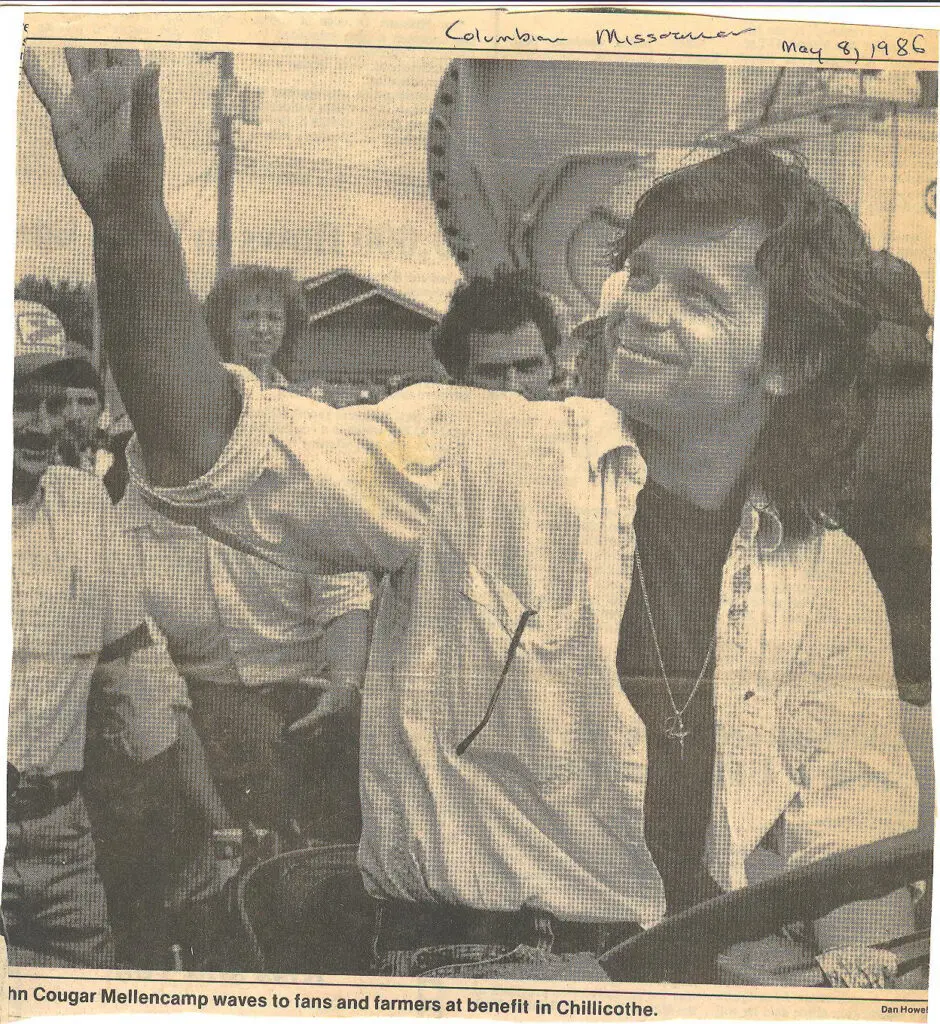
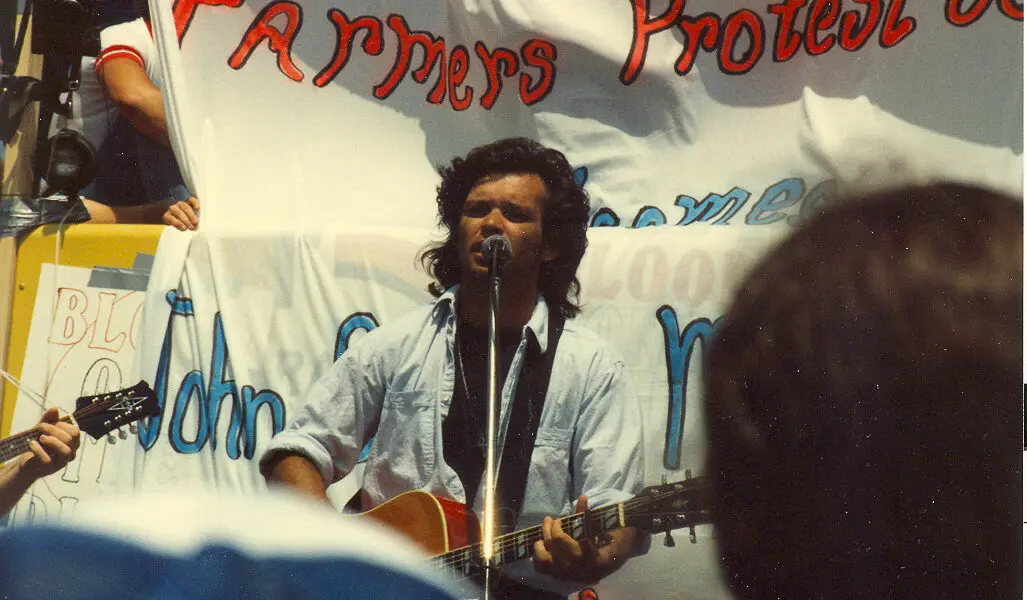
KURN: So against this backdrop, Rhonda has a vivid memory of John Mellencamp taking to the makeshift flatbed truck stage and speaking to the crowd.
PERRY: I know one of the things I love, which is in a lot of the articles, is what John said when he said: “you know, they asked me why I came here, why I came to Chillicothe, and it’s because, you know, this is happening in thousands of towns across the country” And like, it was the perfect thing to be saying and to be, you know, understanding so that everybody understood like his role was to share this message that was going on everywhere and this particular action was how we were going to share that message. And him saying that was just super powerful, I thought, to remind people that like that’s what he was doing was using his voice.
MELLENCAMP: You know, I’ve been talking to a few press people since I’ve got, since I arrived here a little bit ago and uh the question is, why are you here, John? And the reason I’m here, I’m not here against any specific person [muffled] problem you people, I hope for a moment that we can have your guys’ voice be the voice of millions of people across the United States who are suffering the exact same thing, in thousands of Chillicothes all over this country, who are going through the exact same thing you did.
FOLEY: That was John Mellencamp speaking to 10,000 people gathered in the USDA Farmers Home Administration parking lot on May 7th, 1986. That was the 52nd day of the blockade. When we mentioned what he said from the stage during our recent interview, this is how he responded.
MELLENCAMP: I mean, you know, all these small towns going out of business. There were a lot of things that changed the look of the nation back then and even more so today. The face of the nation – I wrote a song once called The Face of the Nation: it keeps changing and changing.
KURN: Face of the Nation is another topical song off John’s Scarecrow album from 1985. But what John remembered most was the crowd and the things said by the other speakers that day.
MELLENCAMP: The people in Chillicothe and the protest went really well. I was surprised at how many people were there, and I was surprised how well educated the other people that spoke knew what the hell they were talking about. Because sometimes, you know, you do these things and… Willie and I did a Senate subcommittee hearing. It was horrible. We fly to Washington DC. We’re talking, and finally one of the senators just said, “Well, are you guys gonna play?” And I just went, I looked at Nelson and I went, “let’s get out of here. They’re not even listening. They don’t care.” You know, people were like leaving as we were talking, and when they saw there was no guitars or what, or what we had to say, you know… Some of the people that represent us in this country are, they’re not good people.
FOLEY: Here, John is referring to a 1987 Senate subcommittee hearing, and you get the idea of what he thinks of some of our elected representatives versus the expert voices of the people he heard in Chillicothe that day.
MELLENCAMP: Every one of them was enthusiastic and you felt, in that moment, as if you had made a difference. I remember feeling very positive at Chillicothe. Simply because, you know, there were so many people there and the, like I said, the people that spoke knew what they were talking about and, you know, it was interesting to me because I was learning stuff from what these people were saying, you know. It was just like, wow, yeah, uh-huh, that makes sense to me. So I thought Chillicothe was, uh, probably one of the better things that I did for Farm Aid besides, you know, just showing up and playing the shows and stuff.
MELLENCAMP: Here we go, you guys: [singing “Pink Houses”]
KURN: That was John’s performance of Pink Houses from that day in Chillicothe. He was accompanied by Lisa Germano on violin and Larry Crane on mandolin. You can listen to the entire Chillicothe set on our website, Farmaid.org/podcast. And when we come back, we’ll hear from Roger and Rhonda of MRCC on the impact that John showing up for farmers had on the movement, and of course, how the blockade in Chillicothe resolved.
KURN: If you’re a farmer, Farm Aid is here for you. Our farmer resource network offers many ways for you to connect. Our goal is to link you up with helpful services, resources, and opportunities specific to your individual needs. Our hotline operators, who speak both English and Spanish, are available at 1-800-F FARMAID. That’s 1-800-327-6243 or can be reached online at Farmaid.org/podcast.
FOLEY: Welcome back. If you listened to our last season on artists and activism, you know that there are so many ways that artists can use their platforms to bring attention to the causes they care about. Like so many Farm Aid artists, John Mellencamp shows up and lends a hand when it’s most needed.
KURN: But you might wonder to what effect? Does it matter? Did John’s appearance on a flatbed truck, in that sea of people, make a difference? It turns out that it made a huge difference, and in multiple ways. Here’s MRCC’s Roger Allison.
ALLISON: And it did, you know, jump it up. I mean, we went from, you know, uh, just primarily farmers and, and rural people, uh, going to the different actions that we were doing, to, you know, getting, you know, younger people that were there and then listening to, you know, what was being said. And, uh, the draw was, was not, you know, our policy work. The draw was John Mellencamp, you know, who brought them in, and then they could listen to it and they accepted it. And that, you know, that momentum, you know, kicked us up, you know, a number of notches from where we were at. And it, uh, you know, solidified, you know, the work, you know, that was being done.
PERRY: Like it became not just OK to be part of this, it became like, if you’re not part of it, what, what are you even thinking? You know, what are you… like, that’s crazy. And that really was significant – I think that Mellencamp effect that did result in the passage of the ’87 Credit Act and then building the national momentum and so many – just like the petition signatures – like it just gave this big boost to something that was happening that you might not otherwise have gotten, gotten there.
KURN: That was Rhonda Perry, also from MRCC. Here’s Carolyn Mugar from Farm Aid.
MUGAR: That’s exactly what you want people to feel. That’s very cool. That’s a good way to put it. Not OK to not be involved. Again, another message for today.
FOLEY: But it wasn’t only that John’s appearance made a difference in that moment, there were long-term ripple effects too. Here’s Rhonda.
PERRY: And a bunch of those people, people who drove from like 2 hours away to come to that, who weren’t like personally, like their livelihood, their livelihoods did depend on it, but it wasn’t that they were farmers, but it’s that they depended on their little small rural community, drove, and they are members of ours to this day. But like that was their first intro to Oh, farmers matter, like it’s like, “shit, my whole little town is only existing because these farmers, we got to do something.” And that was substantially came from them going to that Mellencamp concert. So we have a good number of multi-generational members now who um, came from that period of time, who specifically went to/in some way participated in that Chillicothe action and of course a lot of them went to the Mellencamp action, and those are still like some of our members today.
KURN: Carolyn, like Roger and Rhonda, sees lessons for today.
MUGAR: You know, it gave people, I think, a lot of courage. When people resist and they keep resisting and they don’t give up, it gives other people serious, um, energy to do the same thing, and it’s an example. And again, that kind of thing is so relevant today for us to join, uh, you know, to see leaders like, like the Missouri Rural Crisis stand up, hold the fort effectively. They held this, don’t forget, which was really kind of amazing. And um that is exactly what we need today is for people to stand up, be joined, and to carry on.
KURN: Rhonda and Carolyn are really good at putting an event like this into a longer term perspective, right up to the present day. We didn’t interview the two of them together, but they seem to almost be part of the same conversation. Here’s Rhonda first and then Carolyn, and then hear Rhonda again.
PERRY: I think we would be still an organization who is fighting like crazy, but that was definitely a year and a time when we became what we were going to look like as a membership longtime organization who had a long term vision for things. And that year was one of those years that really made a difference. I remember my dad was like, yep, “I paid the lifetime membership right then, and Roger said we were building an organization.”
MUGAR: It’s sort of about being seen, you know? That when someone who IS seen who shows up for people who aren’t seen, it really gives people a huge boost cause they feel seen, and they ARE seen then – it actually is in fact true. Uh, he shed a light on this. He really did. What I think Mellencamp did was perfect, and it was perfect for him because showing up on a flatbed. You know, in the middle of Chillicothe was, was brave. First of all, you know, you can’t be, you can’t be fussy about your sound system, and you can’t be one of those artists that won’t sing if it’s not a perfect sound system, right? And so you just, you make with what you make do with what the conditions are, and that’s what he did.
PERRY: That didn’t hurt that people felt compelled to be part of something long term and in part because holy cow, if people were like Mellencamp would be standing up for you. And Willie Nelson’s having Farm Aid, and there’s like these pieces that let ’em know that it wasn’t just OK, they should be being part of something, and they were. And thus here we are. And we still have great members in Chillicothe even like today.
KURN: Jesse Jackson and John Mellencamp showing up at the blockade put the USDA in a position where officials had to respond. Roger tells us about his visit with the Secretary of Agriculture at the time, Richard Lyng, who by the way, only took office 10 days before the blockade began.
ALLISON: We had over 10,000 signatures by the time it was over with, and we took that to Secretary Ling’s office – Jesse Jackson got us in – took us into his office, and then I slapped those petitions down in front of him calling for parity pricing and the passage of, you know, 7 USC 1981, the implementation of it, and, um, and a moratorium on farm foreclosures. He was sputtering by the time it was all over with… And yeah, it, it was, it was uh pretty incredible.
FOLEY: Most important, the USDA finally dealt with that abusive county supervisor and re-reviewed his massive caseload of foreclosure files.
PERRY: The USDA did, uh, ship out the, uh, county supervisor.
ALLISON: And another benefit from John, you know, being there was that they sent in a whole team, (USDA), and they went through all of our, you know, the cases of farmers that were losing out. And, in most cases, you know, they figured out some way, you know, to go ahead and rewrite those loans and give them, you know, uh, operating money. And, uh, that if, uh, John Mellencamp hadn’t been there, that wouldn’t have happened. And so that whole era of farmers literally had their farms saved until we had the passage of the – not the passage – but the writing of the, uh, and the implementation of 7 USC 1981, which, by the way, you know, was signed by at that time, the most conservative president, you know, we’d ever had: Ronald Reagan.
KURN: What we didn’t know when we started digging into this anniversary of the Chillicothe blockade is the impact that it had, that John Mellencamp’s participation had on so many folks, especially Missourians like Rhonda and Roger’s families.
PERRY: Yeah, my parents – I was just there this weekend, um, they’re older and still on that same farm – but they benefited from that time frame before the ’87 Credit Act passed, and they didn’t foreclose on people in that area because they went back through the, the stuff like Roger said. But then they also were able to take advantage of this very key provision of the 1987 Credit Act, which is the only thing that kept their farm in their hands for all these years. And my brothers still all live within 3 miles of the farm. 2 of them live on what that farm actually historically was, along with my mom and dad. Like it’s, I feel like I’m like the biggest recipient in the universe of The 1987 Credit Act because, in part, like we are here in this, on this farm because of the lawsuit that helped lead to that, and then my parents’ farm is still intact because literally of this organizing and people like Farm Aid and John Mellencamp and Jesse Jackson who like stood up with farmers in a critical time that allowed it to happen. So, man, I’m lucky.
FOLEY: When we heard this, that both the Perry and Allison farms had basically been saved by the interventions of John Mellencamp and Jesse Jackson joining together with the thousands of people who kept the Chillicothe blockade going, we wondered if John himself had any idea of his impact.
KURN: So we asked Roger and Rhonda to record a message to John. In this message, they thanked him for showing up 40 years ago, and they talked about what it meant to their families and to other farmers. Check out their video on FarmAid.org/podcast. And here’s John’s reaction to their message.
MELLENCAMP: I don’t know that I brought that much to it, but if, if they want to think I did, then great. But I, I really think it was them and, and they had a, a point and a point of view that was correct. And I think that’s what helped ’em more than anything. All I did was, you know, uh, I was a very popular singer at the time and attracted a lot of people [who] might have showed up and had open ears for the, uh, for the protest. And, uh, I, I’m very, uh, happy that, uh, her family is still where they, uh, started, but I wouldn’t want to take any credit for singing a couple of songs.
FOLEY: It’s maybe hard for us to imagine today, in this era of social media, of virtue signaling, etc. that an artist as fantastically popular as John Mellencamp was in 1986, made the selfless effort to stand with farmers and have no agenda in taking credit for his contribution.
KURN: Rhonda also told us about how the reach of that day and that whole period carries on to this day, particularly in the context of food distribution.
FOLEY: It turns out that a Farm Aid grant helped fund the emergency distribution of 6 tons of food to approximately 600 farm families right in the farmer’s home parking lot.
ALLISON: Well, we wanted to show that, you know, the farmers that produced the food didn’t have enough money to buy the food. And so then, you know, we did these, uh, the first food distribution was in Chillicothe. There were hundreds and hundreds of farm families, you know, that were there.
PERRY: And so where I was going with that is we still have a food distribution. It’s now changed from emergency food distribution to food cooperative program, but where people who need food every month, so hundreds of people a year from Chillicothe still get really incredible food from our food cooperative program every month.
MELLENCAMP: Let’s face it, Willie had a a small farm. I didn’t live on a farm, and Neil didn’t live on a farm. So, you know, we were just a voice. We had the ability to, you know, make a noise, so we made it. But then as it went on, you know, things got much more particular and the problem for a moment, but then after that moment’s gone, then the public doesn’t care. My observation is, is that until we realize and people take an interest in the food that we eat, that nothing’s going to change. It’s only going to get worse. And Farm Aid has provided a lot – a lot – of support to the small family farmer, the black farmers in the South and, uh, all over, uh, the Midwest, you know. There’s been a lot of help and, uh, you know, I got to give a lot of credit to Carolyn and, and those people. And, uh, of course, Farm Aid is Willie’s idea.
FOLEY: Farm Aid may have been Willie’s idea, but I want to push back a bit on John Mellencamp’s modesty, because he has been more than just a voice. He has consistently shown up for farmers for 40 years. Right,
KURN: Like in 2023 when John showed up at the Farmers for Climate Action rally in Washington DC where he played for an audience of farmers, organizers and advocates. Here’s a bit of Rain on the Scarecrow from that day.
MELLENCAMP: Scarecrow on a wooden cross, blackbird in the barn. Four hundred empty acres, used to be may farm.
MUGAR: It’s kind of the DNA of Farm Aid too, being, you know, showing up. I mean, that’s what Willie felt, I think, and obviously that’s what Melo, that’s the behavior Mellencamp was mimicking whether he knew it or not, you know, that he was showing up. He knew, he knew it had importance. He doesn’t like admitting it, but he knew it would matter if he could sing for people.
KURN: It’s the great thing about the more than 500 artists who have played the Farm Aid stage over the last 4 decades. They recognize the power of showing up for farmers, for their neighbors, for the planet, and all of us. Now, once again, farmers are faced with skyrocketing costs, disappearing markets, and they’re being forced off their land in huge numbers.
FOLEY: Right now, we need solidarity more than ever. The powers that be want us to forget this history. Because something like the Chillicothe blockade shows that defeat is not inevitable. It shows that we can stand up for one another, then and now.
KURN: Some things never change.
FOLEY: Maybe we need a few more blockades.
FOLEY: Is there something you want us to cover in the future? Send us an email or drop us a comment. You can email us at podcast@Farmaid.org and find us on social media, which is @Farm Aid on Instagram, Facebook, Threads and BlueSky.
KURN: And don’t forget YouTube, where you can watch almost 40 years of performances and other content. Let your friends know about Against the Grain. We’re beyond grateful when you listen, share, like and subscribe to this podcast.
FOLEY: Against the Grain was written and produced by us with sound editing by Endhouse Media and direction from Dawn Sorokin. And thanks to Micah Nelson for our fantastic theme music.
KURN: Thanks to everyone who took the time to speak with us. Head over to our website to learn more about each guest, Farmaid.org/podcast. And thanks to all the farmers out there. We’ll chat with you next time.
KURN: Your donation to Farm Aid strengthens family farmers so they can thrive and keeps them on the land where they belong. Together we can make a real difference in our farm and food system. Head to Farmaid.org/podcast to make a gift today.