Learn more about Against the Grain: The Farm Aid Podcast
 Against the Grain brings the magic of Farm Aid’s annual festival to listeners year-round. Hear from farmers and artists, advocates and food experts, activists and policymakers – all of whom are working towards building a more just and equitable farm and food system.
Click here to listen!
Against the Grain brings the magic of Farm Aid’s annual festival to listeners year-round. Hear from farmers and artists, advocates and food experts, activists and policymakers – all of whom are working towards building a more just and equitable farm and food system.
Click here to listen! Listen to the episode below. And, make sure to subscribe in your podcast app of choice!

Governor Tim Walz
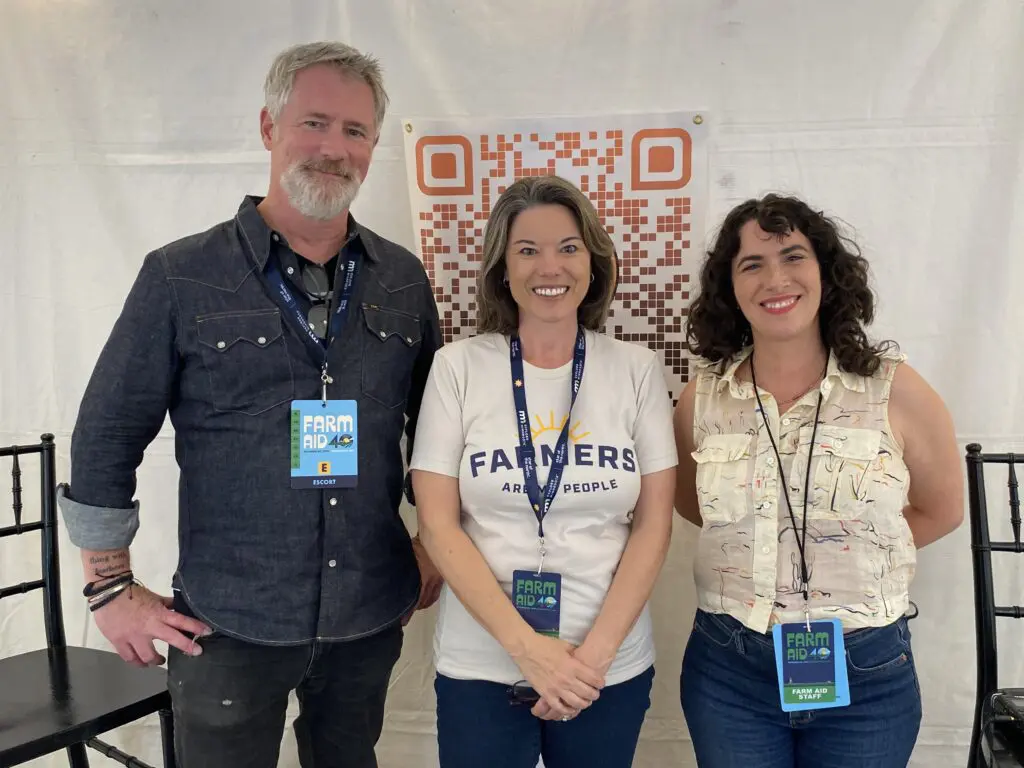
Congresswoman Angie Craig
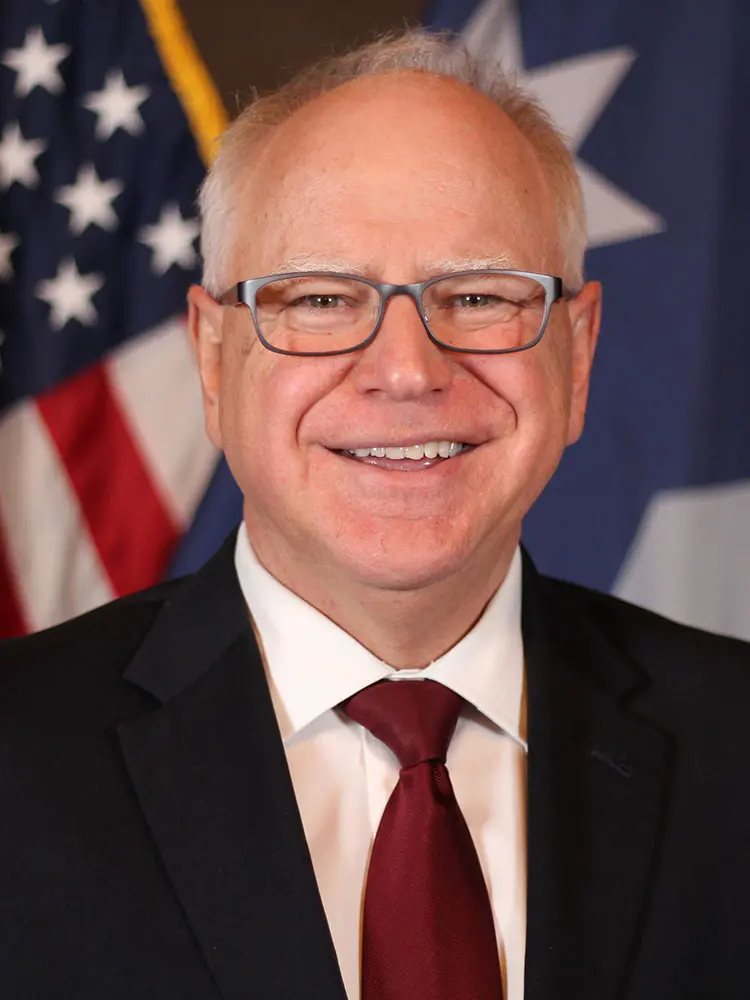
Governor Tim Walz
Tim Walz is Minnesota’s 41st Governor. He was first elected Governor in 2018 and won re-election in 2022. Accomplishments from his time as Governor include providing universal free school meals for students, protecting reproductive freedom, strengthening voting rights, laying the groundwork to get Minnesota to 100% clean electricity by 2040, cutting taxes for the middle class, and expanding paid leave for Minnesota workers. Throughout his time as Governor, Tim has prioritized making Minnesota the best state in the country to raise a family.
Born in a small town in rural Nebraska, Tim’s parents instilled in him the values of public service, generosity toward your neighbors, and working for the common good that guide his commitment to Minnesota today. After high school graduation, Tim enlisted in the Army National Guard. He attended Chadron State College and graduated with a social science degree in 1989. Tim spent a year teaching abroad before returning home to serve full time in the Army National Guard and eventually accepting a high school teaching and coaching position.
While teaching, Tim met his future wife, Gwen Whipple, who taught at the same school. They moved to Mankato in 1996, where they worked at Mankato West High School. In addition to teaching social studies, Tim helped coach the Mankato West football team that won the school’s first state championship. After 24 years in the Army National Guard, Command Sergeant Major Walz retired from the 1-125th Field Artillery Battalion in 2005. Tim won his first election to the United States House of Representatives in 2006 and was re-elected for another five terms serving Minnesota’s First Congressional District in Southern Minnesota.

Congresswoman Angie Craig
U.S. Representative Angie Craig represents Minnesota’s Second Congressional District. She is fighting for a Minnesota where the middle class, small business owners and family farmers can thrive. Consistently ranked one of the most bipartisan Members of Congress, she’ll work with anybody – and take on the Washington establishment – to improve the lives of folks in her district.
The granddaughter of a farm foreman, Angie learned the value of hard work from her family – and in particular, her mother, a single mom who raised three children while earning her teaching degree. Angie worked two jobs to help put herself through college.
She is the former head of Corporate Relations for a major Minnesota manufacturer and a former newspaper reporter. She and her wife Cheryl have four adult sons and three grandsons.
In Congress, Angie is fighting for career and technical training and to make sure that vocational jobs are available to every young person who wants one. She has consistently pushed to fully fund our special education programs in Minnesota schools and to cut bureaucratic red tape and waste in government.
Angie is a strong advocate for cutting taxes on small business and the middle class. She’s worked to lower health care costs by capping the co-pay of certain prescription drugs and expanding health care coverage for all Americans. She has secured major infrastructure investments to improve the roads, highways and bridges in her district and expand high-speed internet connectivity her rural communities.
Angie has led the bipartisan effort to secure the Southern Border and stop the flow of illicit fentanyl into Minnesota communities and she has taken on the social media companies allowing the marketing and sale of drugs on their platforms. She has been a champion for local law enforcement agencies, fire departments and first responders as they work to keep us safe. She remains dedicated to fighting to lower costs for hardworking Minnesotans.
As the top Democrat on the House Committee on Agriculture, Angie is committed to strengthening the farm safety net, improving opportunities for new and beginning farmers as well as protecting access to nutrition programs that feed hungry families and support America’s rural economy. She is working to lower energy costs by investing in an all-of-the-above energy policy that includes renewable fuels.

Senator Amy Klobuchar
U.S. Senator Amy Klobuchar is the first woman elected to represent the State of Minnesota in the United States Senate. Throughout her public service, Senator Klobuchar has always embraced the values she learned growing up in Minnesota. Her grandfather worked 1500 feet underground in the iron ore mines of Northern Minnesota. Her father, Jim, was a newspaperman, and her mother, Rose, was an elementary school teacher who continued teaching until she was 70.
Senator Klobuchar has built a reputation of putting partisanship aside to help strengthen the economy and support families, workers, and businesses. In the 117th Congress, she was number one in the Senate for introducing bipartisan bills and number three for passing bills into law.
As Ranking Member of the Senate Committee on Agriculture, Nutrition, and Forestry, Senator Klobuchar is working on behalf of farmers, agriculture workers, and rural communities by fighting to expand the farm safety net, support food assistance programs, and expand voluntary conservation programs. She has also passed legislation to encourage the use of renewable fuels and to invest in programs to stop the spread of animal disease. Additionally, Senator Klobuchar is devoted to passing on Minnesota’s tradition of outdoor recreation, fishing, and hunting to the next generation and has secured significant funding for research, restoration, and conservation activities, including the 2022 Great Lakes Fish and Wildlife Restoration Reauthorization Act.
Senator Klobuchar is guided by the belief that her first duty is to represent the people of Minnesota. She acted quickly to obtain full funding to rebuild the I-35W bridge just thirteen months after it tragically collapsed into the Mississippi River. She worked across party lines to expand education and job opportunities for returning service members, fought to ensure that Minnesota National Guard members received the full benefits they earned, and helped turn Minnesota’s ground-breaking “Beyond the Yellow Ribbon” program into a national model. As a member, and now lead ranking member, of the Senate Agriculture Committee, Senator Klobuchar worked to pass several bipartisan Farm Bills to strengthen Minnesota’s rural economy and give farmers the certainty and support they need.
Working with both Democrats and Republicans, Senator Klobuchar has made key progress on legislation to keep people safe. She led the effort to pass landmark pieces of legislation to end human trafficking and combat the opioid and fentanyl epidemic. She fought to pass the most significant consumer product safety legislation in a generation, keeping foreign toxic products off our shores and out of our stores. She also pushed the cell phone companies to enact more consumer-friendly policies. Additionally, her efforts to protect consumers have resulted in the largest furniture and airbag recalls in American history.
Read more!Senator Klobuchar also serves as a senior member on the Senate Judiciary Committee where she has been active in advocating for legislation focused on increasing funding for police and first responders, protecting civil rights, expanding drug courts, improving our criminal justice system, and reforming our immigration laws. As Ranking Member of the Subcommittee on Privacy, Technology and Law, she is committed to establishing guardrails online to protect Americans – from children exposed to harmful content and illegal drugs to consumers who have no privacy protections. She has also worked to reinvigorate America’s antitrust laws and restore competition to American markets. She introduced legislation to strengthen prohibitions on anticompetitive conduct and mergers, and make additional reforms to improve enforcement. In 2022, her bipartisan bill to create rules of the roads for digital markets became the first piece of antitrust tech legislation to pass the Senate Judiciary Committee since the advent of the Internet. She also passed bipartisan legislation to modernize merger fees and increase resources for antitrust enforcers. The Washington Post credited her approach, noting, “The moderate but meaningful proposals provide a launchpad for cross-aisle cooperation, a goal of much of the senator’s legislative handiwork.” She has also introduced bipartisan legislation to lower prescription drug prices by cracking down on “pay-for-delay” agreements, the practice of brand-name drug manufacturers using pay-off agreements to keep more affordable generic equivalents off the market. Long focused on bringing down costs for families, provisions from Senator Klobuchar’s legislation to finally unleash Medicare to negotiate lower drug prices with the big pharmaceutical companies were signed into law in 2022.
Senator Klobuchar previously served as the Chairwoman of the Senate Rules Committee, where she has worked to ensure fairness, transparency, and efficiency in government. In response to the January 6th insurrection, she led a bipartisan investigation into the security, planning, and response failures related to the violent and unprecedented attack. The report made numerous recommendations, including passing a law to change Capitol Police Board procedures and improving intelligence sharing. Senator Klobuchar has worked across the aisle to implement these recommendations, including passing bipartisan legislation to give the U.S. Capitol Police Chief with the authority to request assistance from the DC National Guard or federal law enforcement agencies in emergencies without prior approval of the Capitol Police Board.
Senator Klobuchar spearheaded the Freedom to Vote Act in the U.S. Senate and was instrumental in passing the bipartisan Electoral Count Reform Act. Additionally, she helped pass the most sweeping ethics reform since Watergate and has authored legislation to automatically register eligible voters when they turn 18. She has also led efforts to improve election security and prevent foreign interference in our democracy and successfully secured $1.2 billion to strengthen states’ election infrastructure and help protect them from future attacks by foreign adversaries. She was the lead Democrat chairing the inaugural ceremonies for the 59th and 60th Presidential inaugurations.
Before serving in the Senate, Senator Klobuchar headed the largest prosecutor’s office in Minnesota for eight years, making the prosecution of violent criminals her top priority while increasing the office’s focus on white collar crime. In the Senate, she has championed reauthorizations of the local COPS Hiring Program and has prioritized both the funding of local police officers across the country as well as federal law enforcement such as the U.S. Capitol Police, U.S. Attorneys Offices, the FBI, and the U.S. Marshals Service. She led the effort for successful passage of Minnesota’s first felony DWI law and received the leadership award from Mothers Against Drunk Driving. Her safe schools initiative, community prosecution efforts, and criminal justice reforms earned national awards from both the Bush and Clinton Justice Departments. She worked with the Innocence Project to advocate for videotaped interrogations across the country as well as innovative eyewitness processes to protect against false identifications. As a private citizen and before being elected to public office, Senator Klobuchar was the leading advocate for successful passage of one of the first laws in the country guaranteeing 48-hour hospital stays for new moms and their babies.
Senator Klobuchar’s work has gained national recognition. Vogue magazine described her as “personable, popular, and pragmatic,” The New York Times described her as a “former prosecutor with made-for-state-fair charms,” and Working Mother named her as “Best in Congress” for her efforts on behalf of working families. “Want to reform antitrust? Amy Klobuchar knows where to start,” The Washington Post headlined its opinion piece on her sweeping antitrust legislation, the Competition and Antitrust Law Enforcement Reform Act. She has received numerous awards from the National Farm Bureau and National Farmers Union for championing farmers and rural communities. She has been recognized for her work on behalf of children and consumers, and Refugee International gave her the Congressional Leadership Award for her work to support refugee communities. She received an award from the Service Women’s Action Network (SWAN) for her work to fight sexual assault in the military, and the Disabled American Veterans honored her work to improve the lives of America’s veterans. She also received the “Outstanding Member of the Senate Award” from the National Narcotic Officers’ Associations’ Coalition and the Distinguished Public Service Award from the American Legion. In 2022, Ukrainian President Volodymyr Zelenskyy presented her with the Order of Merit, First Class.
Senator Klobuchar was the valedictorian of her Wayzata High School class. She graduated magna cum laude from Yale University and the University of Chicago Law School. Her senior essay in college, published as the book “Uncovering the Dome,” chronicles the 10-year-history behind the building of the Hubert H. Humphrey Metrodome and is still used at colleges and universities across the country. Her book, “Antitrust,” was on the New York Times Best Sellers list.

Farm Aid’s Hank Tremblay
Hank (they/them) is Farm Aid’s Policy and Advocacy Manager. Hank has worked as an agricultural technical specialist and a farmer throughout the Northeast and MidAtlantic since 2014. A self-described “policy geek,” Hank is excited about the potential for policy to be used as a tool to improve our agricultural system and how grassroots advocacy efforts can affect change. They hold an M.S. from Tufts University in Agricultural Science and Food Policy.

Head to our Farm Bill Hub to check out our Farm Bill 101, catch up on the latest developments in Congress and to test your knowledge with our short Farm Bill quiz.
Live from Farm Aid 40: Policymakers talk about the current farm crisis
KURN: For 40 years, Farm Aid has stood with family farmers against corporate power, bad policies and climate disasters. As Farm Aid founder and president Willie Nelson says, “family farmers aren’t backing down and neither are we.” Head to our website to learn more, Farmaid.org/podcast.
FOLEY: Welcome back to Against the Grain: The Farm Aid podcast. I’m Michael Stewart Foley,
KURN: And I’m Jessica Ilyse Kurn. We’re sharing moments from Farm Aid 40, which took place this past September in Minneapolis, Minnesota. Each year at the festival we come together with eaters and artists to celebrate farmers, but this year was extra special as it was our big four-oh.
Michael, what was your favorite part?
FOLEY: Um, man, I’m still processing it all, I guess. Um, I’d say there were a few things that really stood out. One was that we had a really full week of programming that I think a lot of people outside of the festival region don’t always get to see. We did all these events on the campus at the University of Minnesota that were fantastically successful.
There was this great. Color me Country event hosted by Risi Palmer at the Fine Line venue in Minneapolis. You know, the festival itself was pretty epic, like to be in the stadium with 37,000 people, to have this lineup that went on for more than 12 hours, like well past midnight, and Willie seemingly not wanting to go home, was just incredible, you know, to be in that sea of people that whole day. And to have nearly perfect weather, like it couldn’t have all, it just couldn’t have worked out any better than it did.
KURN: Yeah, and especially since the day before it was pouring, pouring, pouring. So that worked out well.
Uh, one of my favorites was probably the spicy brats that we got from Patchwork Family Farms. It’s part of our HOMEGROWN Concessions©. It’s all sourced from family farmers and uses ecological production practices. I’ve got to give a call out to the HOMEGROWN Village and the Skills Tent, the seed saving was amazing, the fabric dyeing, beekeeping, fermentation, so many things you can learn to do, so you can learn while you’re at a festival. And I always love watching people do that.
One thing that was particularly special is we were interviewing policymakers because there were so many of them this year, I think about 30 who were with us at the festival.
FOLEY: We got really lucky and had the chance to speak with the governor, Tim Walz, with Congresswoman Angie Craig, and Senator Amy Klobuchar, all of whom shared some insight into what’s happening in Washington and across the country, and gave their takes on how we can all better support family farmers. But maybe before we hear from the policymakers, let’s get some background on the Farm Bill and where things stand in American agriculture policy today. We got to talk with Farm Aid’s policy and advocacy manager, our colleague Hank Tremblay.
TREMBLAY: The Farm Bill is a huge piece of legislation. It’s passed about every 5 years or so. And it is the policy that impacts both the ways that we grow food in this country, but also, if you’re an eater, it impacts you, and we’re all eaters. It also contains policy that impacts our, our public lands, and impacts forestry, and also includes spending on nutrition. And then conservation, the way that our land is stewarded, and we know that agriculture makes up a huge amount of land in this country. So this is an important piece of legislation that is not just impacting farmers, it’s impacting eaters as well.
KURN: Could you talk a little bit about policies that are currently impacting rural.
TREMBLAY: Yes. The big thing on the top of most folks’ minds right now is healthcare costs. The Affordable Care Act subsidies have lapsed, and we are seeing the impacts of that right now. You know that 17% of rural residents are enrolled through the Affordable Care Act, and we know that rural residents will see on average, an increase of 107% in their healthcare premiums because of the lapse of these subsidies. The rural residents are gonna be disproportionately impacted by these increasing healthcare costs.
Farmers especially depend on the Affordable Care Act because they’re not receiving healthcare through their jobs. Many are self-employed. It’s actually the reason that most farm households hold an off-farm job is for healthcare. We know the farming is A really dangerous profession as well. So it’s really important that farmers have healthcare. The other big thing that is currently impacting rural communities are the cuts to SNAP. 1 in 7 rural households rely on SNAP, and SNAP is also an economic multiplier in communities. For every $1 spent on SNAP, we see 1.50 cents on average in economic activity as a result. So snap cuts are going to impact rural economies as well.
FOLEY: Right, and that’s on top of decades of corporate concentration, shrinking the number of family farms in rural communities and then those rural communities not being able to sustain things like hospitals.
TREMBLAY: Yeah, that’s exactly right. Farms and family farms, especially, are the linchpin of rural economies. They are driving economic activity. They’re going to grain stores, they’re buying from tractor stores. These are the folks attending uh local schools and sometimes ending up in local hospitals, paying into local healthcare systems and local taxes. So when we see a loss of farmers, we see the gutting of these communities and the loss of all this economic power that is driving them.
KURN: So besides the Farm Bill, which kind of is all encompassing, can you talk about individual issues that are facing farmers right now?
TREMBLAY: Yeah, in the policy world, another thing that folks are really thinking about is how the USDA is functioning right now, you know. The United States Department of Agriculture is the agency uh that farmers rely on for both financial and technical assistance. And right now, as we’ve seen with a lot of other federal agencies, there have been huge staffing cuts, and a loss of about 18,000 employees in the USDA since January 2025, which is about a 20% reduction in force. That’s leading to longer wait times for farmers at local field offices who really need USDA employees for help for things like implementing conservation practices and helping them with farm loans.
We’re also still really reeling from the impacts that the tariffs are having. That have been implemented by this administration, created a lot of uncertainty for farmers. Farmers require really months of planning before their season even begins. They’re not easily able to pivot to different markets, but what we’ve seen from these tariffs is this huge amount of uncertainty and farmers have not really been able to adequately respond to it.
Climate change is a constant and increasing challenge for farmers, as well as the diminishing ability for farmers to receive disaster relief. These are all things that could be addressed through the farm bill, were we to have a new one right now.
KURN: I hear all the time people saying, well, you know, they voted for this, they reap what they sow. And it, it just seems to be the sentiment like “we don’t care about farmers, it’s their fault they voted for these policies.” So I’m curious what you would say
TREMBLAY: I would say that farmers aren’t a monolith. We definitely have farmers that do support these policies, but who have been harmed by them. I think largely invisible to the public eye has been he small farmers, the diversified farmers, the farmers that aren’t growing commodities who won’t likely receive a bailout if there is some sort of bailout from this administration as a result of tariffs. So farmers across the board are being harmed, and we are advocating for those farmers as well.
No administration has been perfect. We were critical of the Biden administration’s policies as well at times. Let’s say we are seeing unprecedented attacks on Federal agencies, we are seeing an unprecedented level of uncertainty facing farmers at this moment. And we are seeing a real preference for large scale operations and ways of farming at this moment that have not been true of previous administrations, including what the USDA is currently defining as a farmer. I think in those ways we are in unprecedented times and, and that is what we’re being critical of.
KURN: Many thanks to Hank Tremblay for explaining all of this to us. For listeners looking to do a deeper dive into the Farm Bill, Farm Aid has a great Farm Bill hub on our website. It includes a Farm Bill 101 to answer all of your questions, and there’s a page where you can stay up to date on recent changes. Go to our show page to look for it, FarmAid.org/podcast.
FOLEY: The first policymaker, Governor Tim Walz, is exactly the way you’d expect him to be. What you may not know about Governor Walz is that he served in Congress for many years on the House Agriculture Committee. He helped pass the 2008, 2014, and 2018 Farm Bills, so he knows his way around a farm and a farm bill.
KURN: And just a note, we spoke with all of these policymakers back in September at our festival, which was well before the government shutdown.
WALZ: Governor Tim Walz from the great state of Minnesota.
KURN: Thanks for being here. So how can we stand up for family farmers in this current administration?
WALZ: Yeah, I think the biggest thing is making it clear that, uh, these are folks that want to do it on their own. And they feed fuel and clothe the world. They’re innovating in things like sustainable aviation fuel, and they’re leading on sustainability and organic agriculture, but we need markets. What [with] all the unpredictabilities with climate change and and global, you know, things happening – What they don’t need is the chaos being caused by ourselves, so we can get a farm bill done. We can get trade deals that look, this isn’t some type of game and it’s not a zero sum.
WALZ: We need our trading partners to benefit too, just as much as us. Our farmers want to sell their products. They want to sell them at a fair price. And then I tell people I think you can really focus on buying local on this. Farmers’ markets aren’t just, uh, you know, a thing for Saturday morning or whatever. We have folks marketing locally, locally to schools. They cut the program right away in this administration. The farm to school program was absolutely fantastic. It created local markets. It shut down on the need for more transportation, and let’s be honest, it put healthy foods into the school lunch program. Those are things that we can advocate for and here in Minnesota. We need federal help, but we’re doing what we can do on our own.
FOLEY: And what about the Farm Bill? Like you spent a lot of time in Congress. How do we get a good farm bill for family farmers?
WALZ: Yeah, we wrote 3 of them, and I’ll say another Minnesotan who wrote a lot of those was Colin Peterson, and um, we always got those things done on time. This is simply unacceptable if they’re not there, and I said, I think, you know, for your listeners to know the big issue here is. These are folks that want to separate the nutrition program from the farm program – like you can separate those who grow food from those who eat. It’s stupid. And that’s why, you know, the cuts to things like USAID school lunch programs and things like that – those are, those are not just great programs for people to eat. They’re also markets for our folks and so we need a Farm Bill.
WALZ: We need to make sure there’s a strong commodity title in there. We need to make sure that there’s a strong conservation title in there that benefits back to the local communities because look, um, there was at a point in time where one of Minnesota’s largest exports was topsoil. That’s no longer true. We have over a million acres that were voluntarily in our, you know, our water programs that is cleaning up our water, keeping soil in, no tills, some of those things. So I think what we need to do is we need to make sure that the farm bill incentivizes those types of things because what we don’t see is – you know, we now see bankruptcies, you’re up 50% and I think all of us know the minute there’s a bankruptcy, the vultures sweep in. I mean, John Mellencamp saying about this back in the 80s – that bankers will come in and say, oh, I’m sorry, but well, it doesn’t make it right. He was right about that.
KURN: Can you talk about how important farmers are to the rural economy?
WALZ: Oh, it’s huge, and I tell people this that, you know, there’s a small number of people who do it, do this work. When the farmers make money, they’re buying from the local feed stores. They’re going in and buying their furniture and their pickups from the local dealers. Their kids are going to the local school. They’re using the local hospital, which is the peripheral of all those jobs, even in a state like Minnesota with the Mayo Clinic, 3M manufacturing high tech things, agriculture is still key to this, and if it’s concentrated. It takes away from those rural communities where it’s spread out. If there’s not a farm on every quarter or section or whatever, that’s less people in those towns. That’s why you see like when, you know, my little town when I was growing up in Nebraska: 600 people, 2 grocery stores, a couple of diners over. Well, now it’s under 300 people. The school closed. Next door there’s no business left and, and the town is dying, and that’s the thing that’s happening across America and it’s being accelerated now because look, we’ve got full bins of soybeans. We grow the best in the world. We’re gonna have a bumper crop. We can’t sell them anywhere because the Chinese aren’t buying them, so. You know, I guess you can be tough and you can say we’re gonna make them pay or whatever, but I guarantee you that some folks are quite happy where they’re at. It’s these folks out here and I tell you, we, when these things start to happen, we see calls to our. Our crisis line increased because suicides are up on farms because it’s one thing to lose a business, it’s another thing to lose a 150 year old farm that’s been in six generations of your family, and that is happening again. We haven’t seen this since the 80s, since the first Farm Aid. Glad that Willie and everybody’s here still fighting this.
KURN: Governor Walz has such great energy. Talking to him felt like sitting down with a colleague. He looks at you directly in the eyes and speaks so calmly and confidently, and you can really hear the passion in his voice when he speaks about rural America.
FOLEY: And he was so accessible, even though I think he was everywhere that day, including later on introducing Willie from the stage, but he’s also super knowledgeable. That’s important because the Farm Bill is so complex, it’s helpful to have experienced legislators working on it. Here, for example, is Congresswoman Angie Craig, the ranking member of the House Agriculture Committee. We caught up with her in the Farm Aid 40 HOMEGROWN Village.
CRAIG: I’m Congresswoman Angie Craig and I represent Minnesota’s 2nd congressional district.
KURN: How can we support family farmers given the current administration?
CRAIG: Well, the first thing to understand is that we are trying to put up a hell of a fight. I’m also the ranking member of the House Committee on Agriculture and so I was at the tip of the spear in trying to stop the cuts to Title 4 of the Farm Bill, which cut the SNAP program by $186 billion. And look, I think, uh, folks need to make sure that you’re supporting your local farmers, particularly those small family farmers in this country because things are really hard right now. The Trump Administration, these tariffs are absolutely taking America’s business right now, export business and so support your small family farmer. That’s how we help.
FOLEY: Can we talk a little bit about the Farm Bill, like where it stands and where you think we’re going?
CRAIG: Well, remember, uh, Republicans should have sat down with me and negotiated a 12-title, 5-year Farm Bill and they wouldn’t even sit down and consider that. It hasn’t been a priority for the Trump administration or the Speaker of the House, Mike Johnson, so instead they tried to fund a lot of what should be in a Farm Bill through their partisan budget process. So where we are now, um, I would have supported the money that was in the reconciliation bill for family farmers, but my God, we didn’t have a chance to level the playing field for small farmers in that process. Altogether where we are now is committee staffs, minority and majority are sitting down title by title, and we’re telling them what our priorities are for what they’re calling a “skinny Farm Bill” and we’ll see if what they put together is bipartisan or not. You know, you also got to be careful um about how you pay for it if they want to come back for more cuts to the Nutrition Title, I’ve told them that’s a nonstarter, um, and at the end of the day, uh, you know, I would encourage them not to put a bunch of poison pills in that bill either.
FOLEY: We’ve heard from some of our organizer friends: They think it would almost be better to have no Farm Bill, than a Farm Bill like the one that we seem like we might get simply because it seems like it’s too much money going to big to corporate agriculture and not to family farms.
CRAIG: Well, the money going to big Ag has already been put in the budget reconciliation process. I mean that was $68 billion. What we’re talking about here is probably in the range of $8 billion. So we’re not talking about an enormous amount of dollars to spend. The question is, you know, for example, new and beginning farmers, uh, can we change the definition of that from your first 5 years to your first 10 years? That’s something on a policy level I’d like to see done in the “skinny Farm Bill.” But look, Republicans – this session in particular – have proven that they have no desire to work on a bipartisan basis, so I will stay skeptical until, um, I see that they really wanna take democratic priorities into consideration.
KURN: Can you briefly talk about how the rural economy hinges on farmers?
CRAIG: Well, the rural economy is an entire ecosystem, right? I mean, you’ve got family farms which of course feed and fuel the world, but uh those same individuals are uh critical members of those small towns throughout Minnesota and across this country and why I say it’s an ecosystem is look at what the administration is doing with across the board tariffs on family farms. They’re cutting Medicaid by $1 trillion. They’re cutting Medicare. Literally we are going to lose probably 700 rural hospitals in this country after the budget bill – I call it the big ugly bill – passed the Congress and was signed into law. So you know it’s an ecosystem, the most jobs are created through healthcare, through local schools, through family farms, but without the engine, which is the family farm, none of that happens in rural America.
FOLEY: I feel like we have to ask you about your interventions last week to help resolve the strike. We saw you on the picket line. Can you tell us a little bit about what that was like?
CRAIG: You talk about custodial workers, people who built the stage for today, they were asking for a 3.5% increase in pay, which won’t even cover their cost of living increase because of these tariffs, and they wanna be guaranteed for 3 years. It was such a reasonable ask, and I just wanted to be on the picket line with my Teamsters. I wanted to show solidarity. And I have to tell you what I talked about the most when I was down there is how extraordinary it was that Farm Aid stood with workers, which has been the history of Farm Aid: workers and farm community sticking together on behalf of organized labor. So you know I wanted to support my Teamsters. I would let you know, other politicians could try to negotiate with the university.
I wanted to be down in solidarity. Working people in this country are getting screwed left and right and this administration has made it abundantly clear who they’re prioritizing with “Big Beautiful Bill,” the largest transfer of wealth in our country from the bottom 10% to the top 10%. And to say that I’m outraged about it is a damn understatement. We have to fight back with everything we have. And candidly what we have are elections and kicking the people out who are doing this to family farms across this country and who are doing this to working people and look you know a lot of people who support me also supported this administration and what I say to people all the time is: this isn’t what you voted for, I know that. So to me it’s one fist closed fighting the administration’s policy, the other hand is extended to working folks who may have supported something that they’re not getting and welcoming them back in order to try to change what’s happening in this country.
FOLEY: Congresswoman Craig, another experienced legislator out there fighting for the people both at home and in the halls of Congress.
KURN: I was enormously impressed with her on-the-ground approach and how she really listens and supports her constituents.
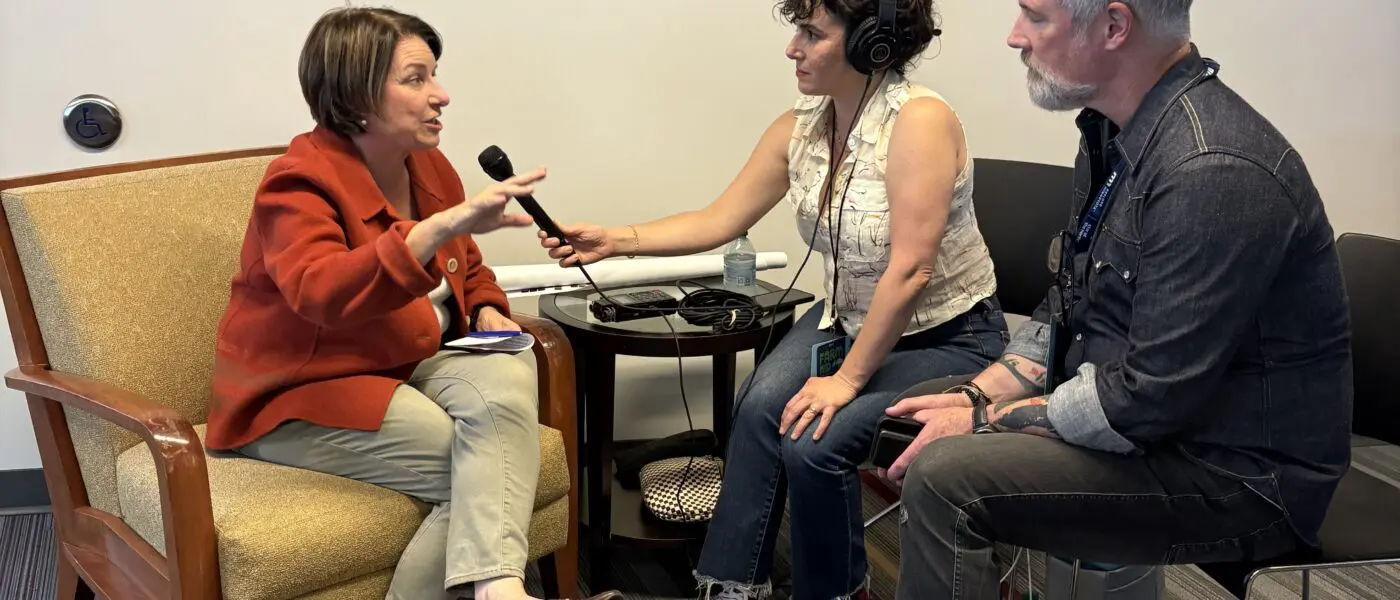
Another Minnesota policymaker who we were lucky enough to catch just as she was exiting a CNN interview was Minnesota Senator Amy Klobuchar.
FOLEY: We did kind of stalk her…
KURN: We did…we did wait around for her. And then in true festival style, we grabbed a bunch of chairs and sat down in one of the stadium hallways to chat.
Can you tell us why family farmers are important to our economy?
KLOBUCHAR: Family farmers are the core of our economy, and right now they are hurting, and that’s why I’m so glad we’re doing Farm Aid. They’re like roadkill to these tariffs basically. Because some of the big conglomerates, they’ve got enough money in reserve, uh, when you start seeing all of the input costs go up, when the markets are drying up, soybeans, especially, they literally have no export market right now. And when you look at American agriculture, about 20% of it is exported to other places. We’re not eating it here. That’s good that we do business with the rest of the world, but because of these Trump tariffs, it’s basically dried up their markets.
Then you have input costs, then you have labor issues because of the fact that um they are not making it easier for farmers to bring in workers. And they’ve had a long history of people from other countries coming to pick fruit or coming to work on Minnesota turkey farms and the like, and they made that very hard. So you’ve got those issues, then you’ve got the changing climate. You’ve got the fact that ag equipment it’s gotten pretty expensive and it’s just really, really hard and so that’s why I am so grateful that Farm Aid is not only raising funds to help our farmers, but also that they’re putting a spotlight on this because it has been really hard to get through when you’ve got, you know, the Epstein files and um all of this stuff every single day.
I keep sounding the alarm as the highest ranking Democrat on the Senate Agriculture Committee that this is a bad thing coming our way and a lot of people voted for Donald Trump because they thought he was going to bring down costs. I get that a lot of people in Minnesota voted for me and him, but now they’re starting to say, “wait a minute, this is not what we bought into.”
FOLEY: What can we do to get a good Farm Bill?
KLOBUCHAR: We need to advance a Farm Bill. I was disappointed that a bunch of the funding went into this other budget bill that was more partisan, but that doesn’t mean we still can’t do a Farm Bill. So here’s things that I’d want to see in it: First of all, an emphasis on the smaller farmers. Senator Grassley and I have worked together on this before. Secondly, SNAP, the food nutrition program, they made some major cuts to that, like over $100 billion in cuts to that. And that’s gonna be really hard for our farmers because they are the producers that get paid but it’s also seniors, veterans, people with small kids and people with disabilities who use that program. There’s going to be some rather dramatic cuts starting in the coming year and so I want to see more of that refunded in this Farm Bill given how high grocery prices are. And then we’ll want to see things like the loan rates should go up. They’re too low given all the financial stress that our farmers are facing. There’s things that we can do for everything from how crop insurance works to help the smaller farmers, but also the new and beginning farmers who tend to be the smaller farmers as well to encourage younger people to keep going into farming.
So I have a whole bunch of things that I like to, but we’ve got a lot of bipartisan bills, and I work with Senator Boozman so that’s all possible. But what I’m honestly worried about is that we don’t want to have just this crisis, which I fear we’re facing. Then it makes it harder to get all those things I talked about because everyone’s like, we need the money right now, and that may be true, but we sure better make sure that when we do this Farm Bill, there’s things that really help the people who need it the most.
KURN: It’s a tough situation that we’re in. Do you see any hope?
KLOBUCHAR: Well, I see hope from my constituents. I see hope that this stadium is nearly full and it is early in the program here because people really care. I also have seen hope, you know, we’ve had a horrible summer in Minnesota. We had the shooting of my friend, the former Speaker of the House, and her husband, and nearly lost another legislator. We had these kids gunned down in the Annunciation Catholic Church in Minnesota. And through all that I just saw these extraordinary acts of love from ordinary people. You know, the 12-year-old shielding a 6-year-old and the teacher taking a kid out of a wheelchair and putting them under the pew and laying on top of that child to be able to save his life. Those are things that make you realize people are still helping each other – from rural to urban to suburban, and that’s what I want to see more of.
KURN: I’m so glad the senator left us with some hope because it’s true there’s still good in this world and there are still ways we can all make a difference. Like you could help a neighbor, or donate to a local food bank. You could buy directly from a farmer at a farmer’s market.
FOLEY: Yes, so many things can be done on an individual level. On our website, you can learn the many ways you can stand with family farmers and make a donation. Go to FarmAid.org/podcast.
Coming up in our next episode, we’ll share more moments from Farm Aid 40. We recorded a live panel discussion with new farmers who are building their operations in the face of steep challenges. Like accessing affordable land and capital and navigating climate change and market barriers.
KURN: This panel also included artist Madeline Edwards, who talked about some of the similarities she faces as an emerging artist in the music industry. It’s small against big, independent against corporate, and definitely features those going against the grain.
FOLEY: And coming up in the not too distant future, we’ll bring you along on a trip to rural Minnesota where we’ll meet with farmers and rural residents who are working to fight corporate dominance in the meat processing industry.
KURN: We’ll share conversations with rural thought leaders about the power of community and hear their insights on the so-called “rural and urban divide.” You won’t want to miss it.
FOLEY: Thanks so much to the policymakers who took the time to speak with us at this year’s Farm Aid festival.
Is there something you want us to cover in the future? Send us an email or drop a comment. You can email us at podcast@farmaid.org. And find us on social media, which is @Farmaid on Instagram, Facebook, threads and now Blue Sky.
KURN: And don’t forget YouTube, where you can watch videos from Farm Aid 40, as well as performances that span the past four decades.
FOLEY: Let your friends know about Against the Grain. We are beyond grateful when you listen, share, like and subscribe to this podcast. Oh, and give us a rating too while you’re at it.
KURN: Against the Grain was written and produced by us, with sound editing by Endhouse Media and direction from Dawn Sarokin. Thanks to Micah Nelson for our awesome theme music.
FOLEY: Head to our website for more. Again, that’s www.farmaid.org/podcast We’ll chat with you next time.