Our new podcast series!
 Listen to the Artists and Activism series of Against the Grain: The Farm Aid Podcast to hear from more than two dozen artists who use their art and voices as vehicles for political engagement and expression on issues that matter to them.
Listen here!
Listen to the Artists and Activism series of Against the Grain: The Farm Aid Podcast to hear from more than two dozen artists who use their art and voices as vehicles for political engagement and expression on issues that matter to them.
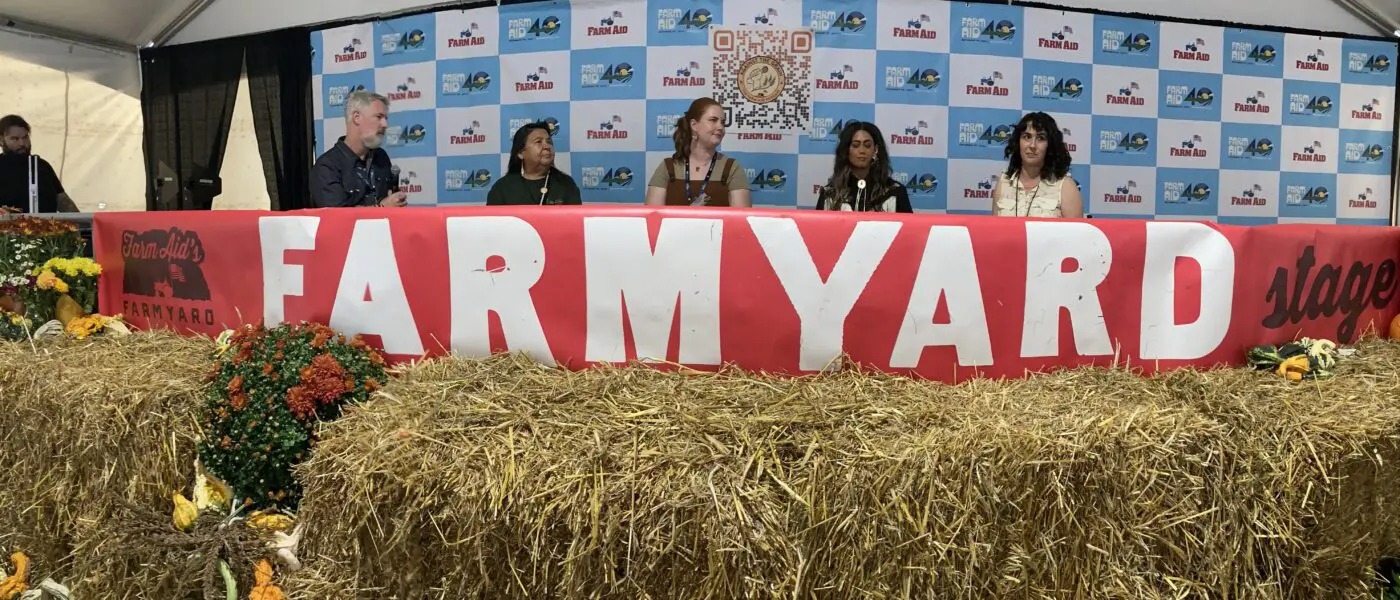
Listen here! In this episode, we take you back to Farm Aid 40, where we recorded a panel discussion on the FarmYard Stage. Our guests include farmer Amanda Koehler, activist Lisa Bellanger and Farm Aid artist Madeline Edwards. Although we could not have anticipated the shocking events that occurred in the Twin Cities just a few months after this panel, the administration’s earlier disruptions to the farm and food system informed our discussion. Tune in to hear about the challenges faced by new farmers and emerging artists—and the hopes that keep them moving forward.
Listen to the episode below. And, make sure to subscribe in your podcast app of choice!
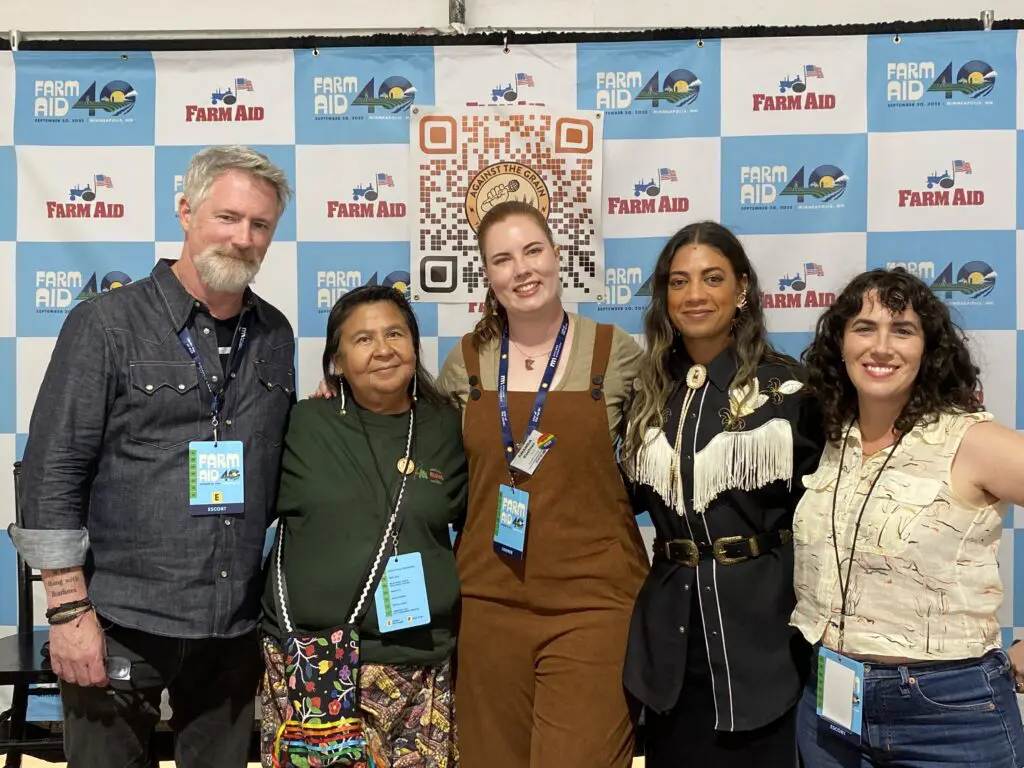
From left: Michael Stewart Foley, Lisa Bellinger, Amanda Koehler, Madeleine Edwards and Jessica Ilyse Kurn.
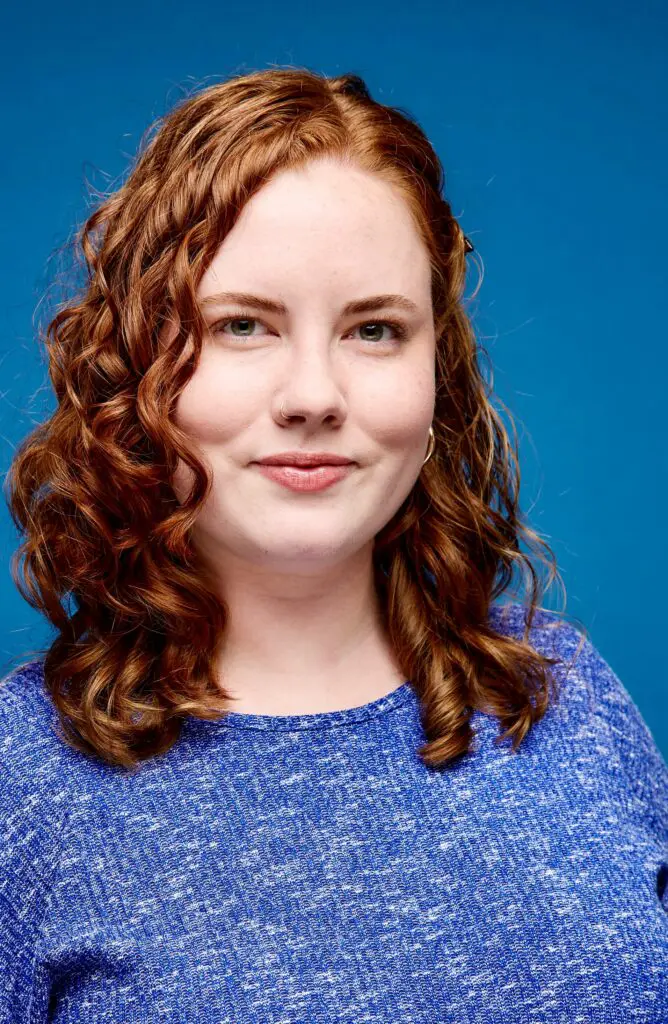
Amanda Koehler
Amanda Koehler (she/her) is an urban farmer, grassroots organizer and advocate based in Saint Paul, MN. She has a decade of experience in driving lasting change at the local, state and federal levels, focused on regenerative agriculture and land access, strengthening immigrant rights and democracy and building working class power.
Currently, Amanda is the Land, Capital and Market Access Network Manager, Minnesota Democracy Defense Table Deputy Director and a policy consultant for Renewing the Countryside. Formerly, Amanda served as the National Young Farmers Coalition Land Policy Associate Director, Land Stewardship Project Policy Manager and consultant for the Midwest Farmers of Color Collective, Monarca Rapid Response Line and Regenerative Agriculture Foundation. She has also served in elected union leadership, managed several successful political campaigns, and holds a Master’s Degree in Advocacy and Political Leadership.
As owner and operator of Maple Urban Farm, Amanda raises 15 organically-fed heritage-breed hens, 75+ varieties of produce and regenerative systems such as composting, rainwater capture and self-sustaining perennial pollinator habitat.
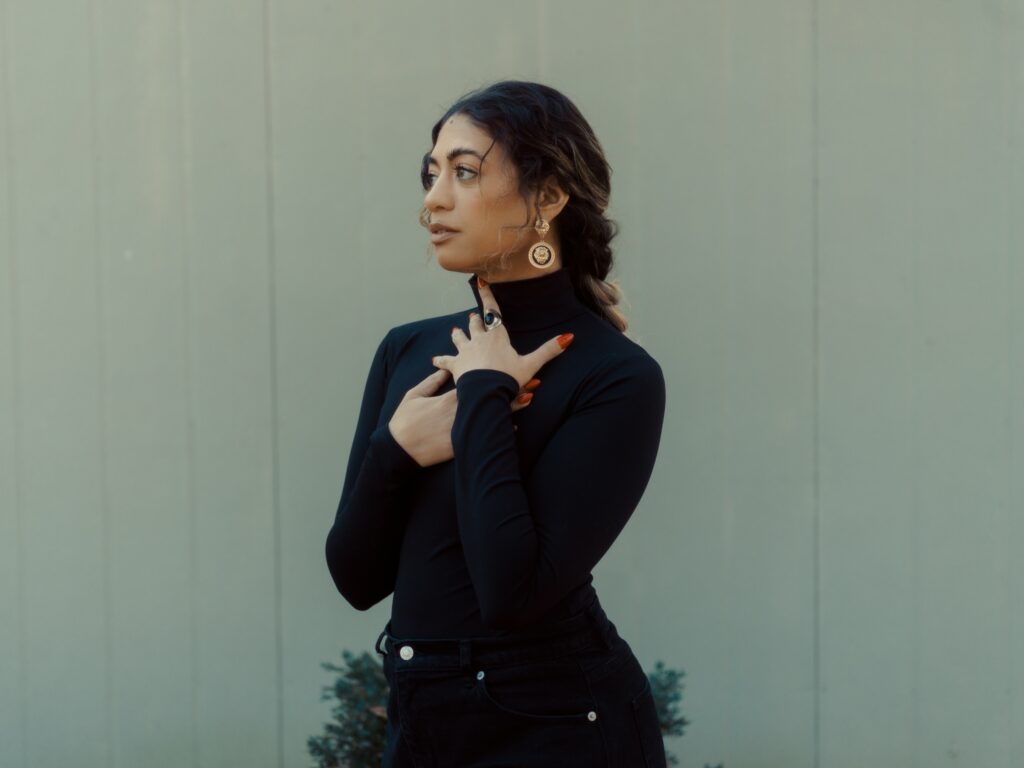
Madeline Edwards
Madeline Edwards makes music for the deep feelers—the ones who’ve known loss but still choose love. Raised in Houston after moving from California in grade school, she’s the oldest of five and grew up fast in a broken home. By 14, she was gigging in bars and eventually put herself through college at the University of Houston, studying advertising and law—while picking up side hustles (including walking dogs) to help support her family.
After over a decade of writing, producing and performing independently, a Tiny Desk performance with Tobe Nwigwe changed everything. A few DMs and one roommate-wingman later, she met her now-husband Jim. They got married and moved to Nashville to give music everything she had.
In just two years, she signed with Sony Music Publishing and Warner Music Nashville, sang with The Highwomen on a Lady Gaga track, opened for Chris Stapleton and Willie Nelson, made her Grand Ole Opry debut, and performed at the CMA and CMT Awards. Then, everything shifted. Edwards lost her brother to suicide after his battle with schizophrenia. Months later, she was dropped by her label, management, and most of her team. What followed was FRUIT—a record born from grief but rooted in hope. A revolution: her music doesn’t just transcend genre, it transcends generations. With FRUIT, she’s ignited a quiet movement of people healing through story, spirituality, and song. In 2025, she joins Willie Nelson and Bob Dylan on the Outlaw Tour.
Click here to watch Madeline’s Farm Aid 40 set
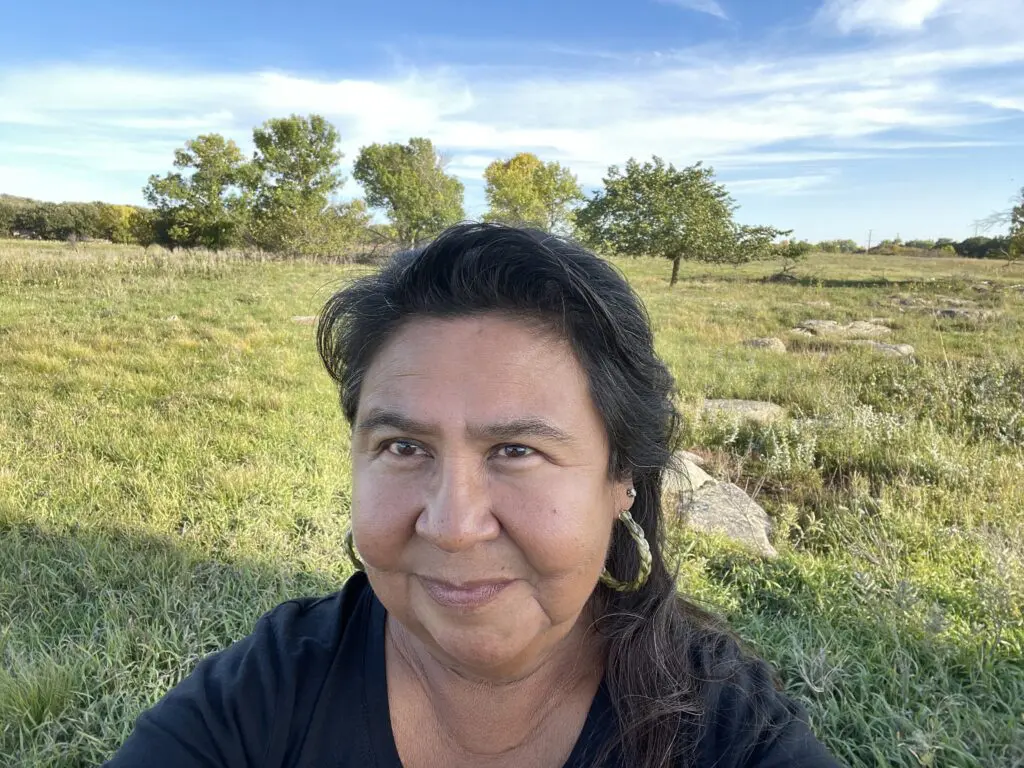
Lisa Bellanger
Lisa Bellanger, Ojibwe and Dakota, an enrolled member at Leech Lake Band of Ojibwe in Minnesota. For over 40 years she has worked with children as a teacher of her Indigenous language and culture and supported her community through many Indigenous cultural events, community safety with a focus on community wellness through traditional healing.
Throughout her career, Lisa has maintained strong community ties, serving on a variety of Boards for the American Indian Movement Grand Governing Council, Rural Coalition, the International Indian Treaty Council, Three Fires Ojibwe Cultural and Education Society, and Wicoie Nindagikendan Urban Immersion Project. Her lifetime of service was recognized in her work focusing on the needs of Indigenous people and our lands, treaty rights and lifeways driven by the teachings of 7 Generations with an Unsung Hero award. Lisa follows her traditional Ojibwe teachings and uses her knowledge and gifts to help her people.
Currently Lisa is working on the recovery of three American Indian children, buried at the Pipestone boarding school and has hosted community sessions to begin the work specifically on healing of boarding school trauma. Lisa also travelled to Canada to assist a family in the honoring of a relative lost to a boarding school and the unmarked grave found miles from home. “Our children, our families deserve peace, our relatives deserve healing from the pain that runs through us….”
As the Executive Director of the American Indian Movement Interpretive Center, Lisa works locally with their AIM Patrol, working to keep our community safe, through our weekly weekend patrols, but also in today’s times, from US DHS, ICE with 24/7 patrols. Our programming work also includes the AIM archives project, Food Sovereignty/Food Security project and our Mother Earth conservation project.
Farm Aid 40: Live from the FarmYard Stage
AD KURN: If we all stand with farmers, we can make a real difference in our food system. Your donation to Farm Aid strengthens family farmers so they can thrive, and it keeps them on the land where they belong. Please make a gift today by heading to Farmaid.org/podcast.
KURN: Hello and welcome to Against the Grain: The Farm Aid Podcast. I’m Jessica Ilyse Kurn.
FOLEY: And I’m Michael Stewart Foley.
KURN: This is a special episode and it’s going to take us back to our festival, Farm Aid 40, which was held in Minneapolis, Minnesota. There we had a panel, a live panel on our farmyard stage.
FOLEY: Right, if, if you can imagine Farm Aid’s HOMEGROWN village, there’s usually two stages. One is for the Skills Tent and one is for the FarmYard Stage, and in between are all these demonstrations and exhibits that are taking place from agricultural organizations working to improve our farm and food systems. Sometimes there’s tractors, sometimes there’s farm animals on hand too. And a small but dedicated staff of Farm Aid volunteers and our colleagues pull this together every year, it’s pretty incredible.
KURN: Yeah, and I lead the Skills Tent and have the same volunteers every year come back and follow us around the country. And they really make it happen. They put together the skills tent, they help in the homegrown village decorating and just making it come alive.
FOLEY: Yeah um, the HOMEGROWN village is kind of like Farm Aid’s version, like a one day version of a county fair, and if you can think about one end of it this year, which was sort of right on the outside of the stadium. is where the FarmYard stage is, and that’s where we host live conversations between farmers and artists. So this year, Jess and I hosted a panel for this podcast featuring Amanda Koehler, who’s a young, rockstar farmer who leads Maple Urban Farms in Saint Paul, and Lisa Bellinger, the executive director of the American Indian Movement, which is the legendary grassroots indigenous rights organization. She’s totally amazing.
KURN: Also joining the conversation, bona fide rockstar and first-time Farm Aid artist, Madeleine Edwards.
FOLEY: So let’s jump into it. Here we are on the FarmYard stage in Minneapolis at Farm Aid 40.
KURN: OK, so to start, I’m gonna start with Amanda. Can you talk to us first, maybe introduce your farm, tell us about what you grow on your very small but mighty farm, and then if you could talk about the struggles and the obstacles that family farmers face, the beginning farmers.
KOEHLER: Absolutely. Hi everyone, I’m Amanda. I, um, own and operate Maple Urban Farm in Saint Paul, Minnesota. We have laying hens and over 75 species of vegetables and herbs on our very small piece of land in Saint Paul, Minnesota. We’ve pretty much converted everything that that’s not concrete on our land into agriculture, and we sell it to family, friends, and neighbors, and we also have a program where we take donations and then redistribute food at no cost to our neighbors who are facing food insecurity, which is particularly important right now with what we’re seeing at the federal level with snap cuts and and other efforts to make the safety net weaker for our neighbors.
For me, I decided to start farming because I’ve been an advocate and organizer with farming communities for the last 10 years, and I fell in love with it, and it just kind of spiraled. And I’ve now seen Just how hard those barriers are for young people. I have a lot of privileges. I own my house. I have a car. I have a master’s degree. I have a family that could support me if I asked, and I still have no idea how I’m going to afford farmland.
I have no idea. The biggest barrier that I face and I think a lot of young farmers face is capital. Like we just need the money to be able to buy land, to be able to buy equipment, to be able to get credit. Without land we can’t leverage that to, to get credit. And markets is a whole issue. So I’ve spent the last few years working to make those things easier for young farmers, whether that’s with the National Young Farmers Coalition or the Land Stewardship Project, and I’ve been really. Having a hard time these last 6 months because all of the progress that we have made at the federal level is being rolled back, especially for those of usI’m a queer farmer and we also have a lot of programs for black, indigenous, and farmers of color and, and LGBTQ+ farmers, and those programs are specifically being targeted and frozen and terminated and taken away. And Instead of trying to help the next generation, we’re seeing more and more barriers than we saw a year ago.
FOLEY: So part of the reason we wanted to bring the three of you together was to talk about, uh, you know, challenges and solutions across the different areas that you work in. So maybe Madeline, we could ask you, we were talking a little bit backstage. About any overlap or any similarities you see as an emerging artist in a totally different industry, but is there anything there that you recognize in the story Amanda’s telling?
EDWARDS: Yeah, definitely, um, man, I’m blown away by you. It’s really cool getting to hear your story. Yes, I mean, I’m an Americana and a country singer in Nashville. And when I first came onto the scene, it was definitely like the cool thing during after George Floyd’s death and the rise of the BLM movement. It was, you know, a check mark, uh, for a lot of labels to bring on queer artists, to bring on artists of color to kind of make their roster look cooler to make them look more like they’re accepting of all artists and so, you know, obviously we’ve seen. In a very short amount of time, most of those black artists that got signed at the beginning of 2021 are no longer signed to major labels at all.
That goes across the board with queer artists and etc. etc. and so there definitely is a disadvantage whether I wanna think of those disadvantages walking into rooms or not. I try to definitely think of that as an advantage because then you’re bringing in groups of people or stories that maybe don’t look the same as the tapestry that we’re seeing in country music or Americana music and so I always like to see the differences as an advantage whether the industry or uh the people that are profiting would like to tell me that it’s not so I, I definitely see the challenges. I try not to Uh, adhere to them as much, but it definitely is something that’s affecting these young farmers probably more than it than it is for people in the music industry, so there’s some similarities, but I’d like to think of them as an advantage if that makes any sense.
KURN: Lisa, so I know you come from a long line of activists, and I’m curious how activism informs your work a little bit more about your work, and, well, I’ll stop there.
BELLANGER: Boozhou everybody, um, I am Anishinabe Dakota from these lands here and so welcome to our homelands. And the American Indian Movement, yes, was born here in Minneapolis and Saint Paul, and I grew up within that movement and had the opportunity to hear elders from around the country and part of the message and part of the message in the direction that the American movement has always gone is reclaiming and reviving our culture and our traditions and that is very land based. And so I remember my uncle Vernon Bellecourt says you shouldn’t eat unless you grow your food, you know? You have to grow your food first before, you know, and remember that that food is a privilege and that we have a responsibility to ensure that our relationship with land and food is well protected and maintained and that the knowledge carries into the future. So, you know, how does that inform my work? I’m a teacher. I’m an educator. I’m a licensed teacher with Saint Paul schools and I have the opportunity now to teach teachers. So I do the professional development around American Indians and you know one of the things that my mom as one of the founding members of Saint Paul AIM, she helped form the Rural Coalition and. The Rural Coalition, we’re, we have a lot of representation here, but part of that was because we were fighting number one the the GMO of our wild rice, a sacred food, but we were also, and also the commodification when they’re trying to do paddy rice out in California, but she was fighting that but at the same time. She says that we need to ensure that our voice is at the table. So my work not only is with children and ensuring that they have the opportunity to learn our relationship with earth and plants and food and community but also that we have also relationship and being able to protect that. And so with Rural Coalition being, you know, they organize farm workers and small farm owners and. Fisher people and so my mom wanted to ensure that we were represented as native harvesters. And hunters and gatherers.
FOLEY: Yeah, I want to stop here just for a little bit of background because Lisa mentioned the Rural Coalition, which is a longtime Farm Aid ally. Rural Coalition has been around since 1978, so they were an early responder to what became the 1980s farm crisis.
KURN: Yeah, right. And as Lisa mentioned, her mother, Pat Bellanger, was a founder of Rural Coalition.
FOLEY: Pat Bellanger was not to be trifled with. She not only helped found Rural Coalition, but she had previously helped to establish the American Indian Movement in the first place, and had been instrumental in the push to get the Congress to pass the Indian Child Welfare Act in 1970. That’s the piece of legislation that transferred jurisdiction over children living on reservations away from the Bureau of Indian Affairs to local tribal governments.
KURN: Pat was also a founding member of WRAN, and that stands for Women of All Red Nations. So with them, she fought to hold mining companies accountable because there was infertility in Dakota women who lived near these mines. Michael, didn’t you have a conversation just like this, just the day before?
FOLEY: Yeah, that’s right, I was, uh, at the Farmer Forum, which Farm Aid puts on every year, the day before the festival, and I had been talking with uh the Rural Coalition’s longtime executive director, this is Lorette Picciano, and Lorette was saying that while a lot of us, understandably, in the family farm movement, have been outraged by some of the policies coming out of the new administration, her tribal brothers and sisters have been kind of just shrugging because they’ve seen plenty of government malfeasance like this before, just like you were just talking about. So I asked Lisa on the panel, what are the lessons, if any, that can be drawn from this kind of historical context.
BELLANGER: Yeah, you know, as American Indian people and tribal nations we have had always our difficulties with the US government, you know, like trying to get people vaccinated when the government says everyone has to have a vaccination. Well, the last time they did that we all ended up with smallpox. So our fight and our work is to ensure that people do that, um..well, we see history repeating itself and yes we do have tools and we have knowledge from our previous struggles that helped to inform us and move our work forward and get past these ones and we were one of the ones also that our funds were frozen and then they say a year later write a report and we’re like, mmm, you know? “You froze our funds for 11 months and then come back and say well we need a report now…? you know, so we need to uh…. I’m so glad we’re all gathering here today, let me tell you. [applause]
KOEHLER: So a lot of this is doom and gloom. Is there anything that brings you hope in this current moment, any of you?
EDWARDS: I’ve been listening to stories like y’alls all day long and it’s just been a really beautiful way of getting to become more educated on what’s going on in America with our young farmers, with farmers that have been here for generations. It’s really encouraging to see so many young farmers even in urban communities just being really passionate about this because this is, you know, the foundation of America is being able to eat and so it’s been really beautiful just getting to hear these stories and just getting to kind of relate to y’all even if it’s not in a completely different industry than mine. So thank you all so much for sharing and being here and present.
I think for me what gives me so much hope is the solidarity that I see growing between farmers and urban people and laborers and farm workers. We’re seeing how we’re all being hurt by this and some people are absolutely being hurt in different ways and more deeply than others, but we are all hurting. And so seeing that solidarity grow. And, and come together. I mean, just one little example, but important example is how Farm Aid has, has stepped up in solidarity with the Teamsters here at the University of Minnesota to make sure this still happens.
And I think We are so creative. I, I work, one of the projects I work on is to support a network of folks who were, who are grantees of the United States Department of Agriculture, the Land, Capital and Market Access Program. And even though their funds were frozen and now they’re unfrozen, we still don’t know if they’re going to be terminated or not. They’re still being incredibly creative and moving their projects forward and figuring out how to get around the USDA not answering emails or (well because a lot of people have been laid off) so I think just seeing the creativity and the solidarity has given me hope and we have our nation has been through a lot of dark things and it is deeply concerning what’s happening right now but I, I think we can. If we’re coming, if we come together and we see how we’re our all of our neighbors are being harmed and we celebrate our differences instead of finger point and blame each other, I think we can get out of this. I really do.
BELLANGER: I see hope in the in the work that’s happening around um the young farmers and teaching our children getting their hands in the soil and teaching them. You know the growing but also in harvesting. I have a beautiful picture of my friend you know little baby just reaching out and grabbing – we were harvesting choke cherries this summer – and you know that intergenerational sharing and knowledge of you know that’s indigenous conservation you know where we pass through these traditions and how do we how do we harvest our fruits and our berries and our plants, our medicines, and then what do we do with it and so. Seeing these children and over here you’ll see down a couple tents is the Wicoie, the AIM and the Wicoie Nandagikendan language program, and our urban, it’s an urban language program that offers Ojibwe and Dakota languages two totally separate, but they have a garden and they go, the children go and they care for their garden and they harvest and they get to eat and so. You know that is worked right into their daily learning – is is our relationship again with food and then the passing again the indigenous conservation where we’re passing knowledge and to ensure it flows through to the future generations.
FOLEY: I wonder if, if we’re thinking about the audience here of festivalgoers or who listen to the podcast and think about what can we ask of them as allies in this kind of struggle, right? Like partly we’re talking about capital and who has it and who doesn’t, and how we change it permanently, but how do we get more people involved? Like how do we build a movement like you alluded to it a bit talking about building more solidarity. How do we do that across all these kinds of… for people who are not, you know, associated with farming at all, for example, right? Who don’t, who maybe don’t think about where their food comes from until they come to Farm Aid and see it, you know. How can we scale up?
BELLANGER: You know, when the, when it was becoming known that there was some programs that were suffering from the frozen when the funds were frozen and you know what she talked about with the the with (Amanda sorry I don’t wanna be she) but what was talked about was how the administration just wiped out whole layers of people in a system where these funds process through, you know, each level has their own responsibility and to ensure that those programs are received the funds that they need to operate. Well, in the meantime there was other organizations that said hey wait a minute, we heard you guys are having issues and we would like to help you and so there was assistance that was offered out to kind of tide us over and help us with you know trying to make ends meet as we’re like. But we’re still doing the work, you know. We went forward with the work and you know because we have to continue, you can’t just let your garden go, you know, you can’t just let your crops not be harvested. The the work still has to carry on and so you know and. When the calls go out for, as was spoke of, there was a big push to for the university to get, get it together right? You know the people rose. You know we all sent emails and phone calls and sent shared and the sample letters and stuff and so we’ve seen how that works, you know, the unity. And so reaching out to …if your expertise is in water or irrigation systems or your expertise is in cover crops, you know, look around to communities: who’s in your circle? who’s in your bubble where you can might wanna lend a hand? Because we know that times are hard and we get back to the the elbow to elbow and farmer to farmer that we can do this.
KOEHLER: I think there are kind of two buckets of what I would say of what we need from people and I really just want to acknowledge that it’s, it’s hard. Like we’re all trying to make it through the day and feed ourselves enough food and pay our bills. Like our current economy and and system is not meant for us to come together and that’s intentionally, right? And. There’s a whole scale of how we can get involved. You could spend 30 seconds sending an email to your state senator or your, you know, US senator representative, but I also think it’s about building community like you were saying, how can we come together. We can fill the gaps creatively and we need each other right now. And there are ways we can do that. We can give eggs to our neighbors, something I do, right? And uh finding a community garden near you or, or whatever it might be, but I think it’s raising your voice in the ways that you, you can. You don’t have to fly to DC and meet with a bunch of people to have your voice make a difference. You can really make a difference from wherever you are with however much time you have and also just yeah making those relationships talking with people about these issues – not everyone knows about everything that’s going on and we need to have these conversations with our family members, our friends, our neighbors.
FOLEY: The festival is always like a blur to me, and that was maybe more true than ever this year at Farm Aid 40, so it was nice to get to stop and have a meaningful conversation with folks in the middle of the HOMEGROWN village and 37,000 festivalgoers. It was really an epic day.
KURN: I agree, it really was. And, you know, we’re about to do it all again in less than a year. So we want to send out a huge thank you to Amanda Koehler and Lisa Bellannger for speaking to us about their work and definitely for ending us on a hopeful note because we all need that.
FOLEY: Yep. And thanks to Madeleine Edwards, whose song Hold My Horses you’re hearing now. She performed this and other songs live on the Farm Aid stage, so go check that out and uh check out Madeleine’s most recent album, which is called Fruit, wherever you buy records, and try to catch her when she comes to your town.
KURN: Information for everything we talked about is always on our podcast website. That’s www.farmaid.org/podcast.
FOLEY: Got any questions? Is there something you’d like us to cover in the future? You can email us at podcast@farmaid.org, and you can always find us on social media, which is @FarmAid on Instagram, Facebook, threads and now Blue Sky.
KURN: And don’t forget YouTube, because you can watch all the videos from Farm Aid 40 as well as performances from the last four decades.
FOLEY: Do us a favor and let your friends know about Against the Grain too. We are so grateful when you listen, share, like and subscribe to the podcast. Oh, and give us a rating too while you’re there.
KURN: Against the Grain was written and produced by us with sound editing by Endhouse Media and direction from Dawn Sorokin. Thanks as always to Micah Nelson for all of our awesome theme music.
FOLEY: Head to our website for more. Again, that’s www.farmmaid.org/podcast. And thanks to all the farmers out there. We’ll chat with you next time.