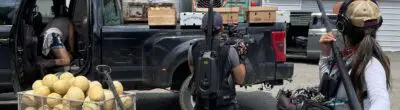
When the annual Farm Aid festival came to Virginia in 2016, we had the pleasure and privilege of meeting Mike and Molly Peterson of Heritage Hollow Farms in Rappahannock County, Virginia. Molly and Mike’s story of coming to agriculture from other careers is inspiring; Mike was a chef seeking to get closer to the roots of the food he served and Molly was (and remains) a professional photographer committed to showing the joys and challenges of farm life (as well as documenting all the monumental moments of life, like weddings, births and graduations). Molly’s beautiful farm photographs have graced the Farm Aid stage since 2016 and her current project involves documenting a neighboring regenerative farm.
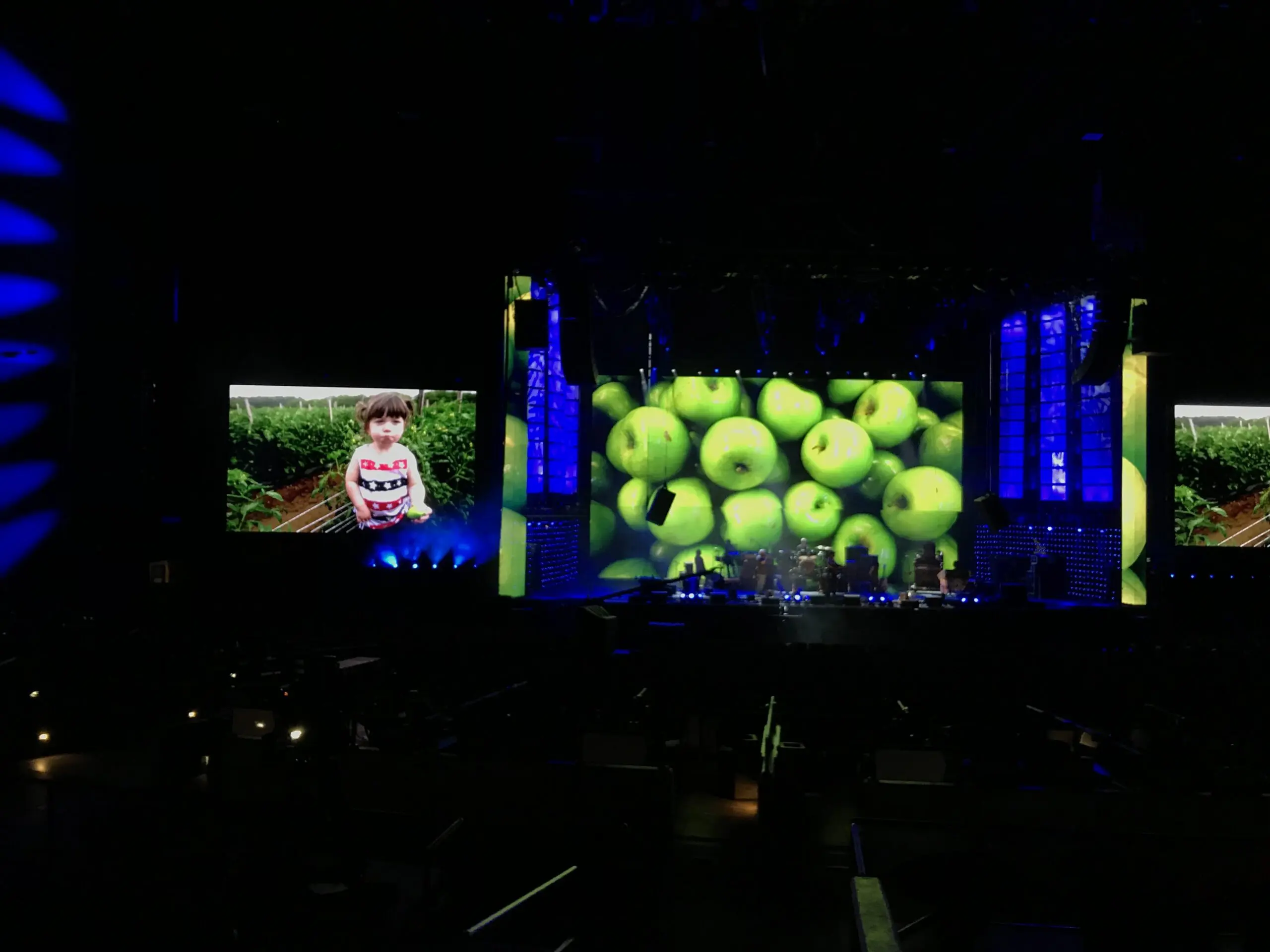
Molly’s photos on displayed on stage at Farm Aid 2016.
Shortly after Farm Aid 2016, Heritage Hollow Farm won a $50,000 contest, competing against businesses in many industries across the country, the farm won for its innovative communications and the community Mike and Molly built through them. The promise of their small-scale farm seemed endless, illustrative of the very best potential of family farm agriculture. But, as Molly said in the video announcing their win, “Farming can be one of the most soul fulfilling and soul crushing careers–and often in the same day.” I checked in with Mike a couple weeks ago to learn about the ups and down they’ve experienced since 2016.
“As a young farmer, there is so much stacked against you.”
Heritage Hollow Farms was Mike and Molly’s everything, but the entire operation–land, part of the cattle herd and the farm store–was based on rented land and infrastructure. As any young farmer in that position knows, it can all change in an instant. And that’s exactly what happened to Mike and Molly. Mike says, “All of our leases were ending and we were working hard to secure new land and keep things going. We were working with a realtor and when we couldn’t find the right land for our operation, we got creative and tried to connect to new farmland owners to offer our regenerative agriculture experience as a way for them to manage their new purchase.” In the end, time ran out, and Mike and Molly hustled to find new farms for their herd, rather than sending them to slaughter. Mike says, “After everything we had done, there was nothing left of it… No trace. And we’ve seen other farms come and go just like us. As a young farmer, there is so much stacked against you.”
But their story doesn’t end there. Mike and Molly landed on their feet with their many skills outside of agriculture and their deep experience inside of it. Molly continued her photography career and Mike became the Senior Livestock Director at Stone Barns Center, the renowned regenerative farm and restaurant in New York. During that tumultuous year of 2016, one of the great things to happen included the adoption of their first child Alden; they later welcomed their second son, Zavier.
“New York was interesting, but I knew it wasn’t going to be longterm,” Mike says. “I was gathering my thoughts about the next phase–what I wanted our family life to look like. At Stone Barns, I was working 70-80 hours a week, and that wasn’t sustainable. And we weren’t living on the farm, so the kids couldn’t be as involved.” Molly, who began homeschooling the boys, incorporated agricultural learning into their curriculum as much as possible, but it wasn’t the same as the dream they had to raise their family on the farm.
Mike’s exploration during his three-plus years at Stone Barns led him to consider how he could have more responsibility for land management, not just livestock. “I wanted to have a sizable amount of land. I was confident in all I had learned and done and I wanted to scale those skills up and have more impact–not just on the herd, but on the land. So I started making calls.” Mike came into conversation with Kinloch Farm, located in The Plains, Virginia, not far from the roots of their first farm. Kinloch was looking to hire someone to manage its beef herd and sales. Mike didn’t immediately jump at the opportunity, because he was envisioning something more integrated and holistic. “We continued the conversation for six months, and over the course of that time, conditions changed that made my vision for more responsibility and oversight of land management possible at Kinloch.”
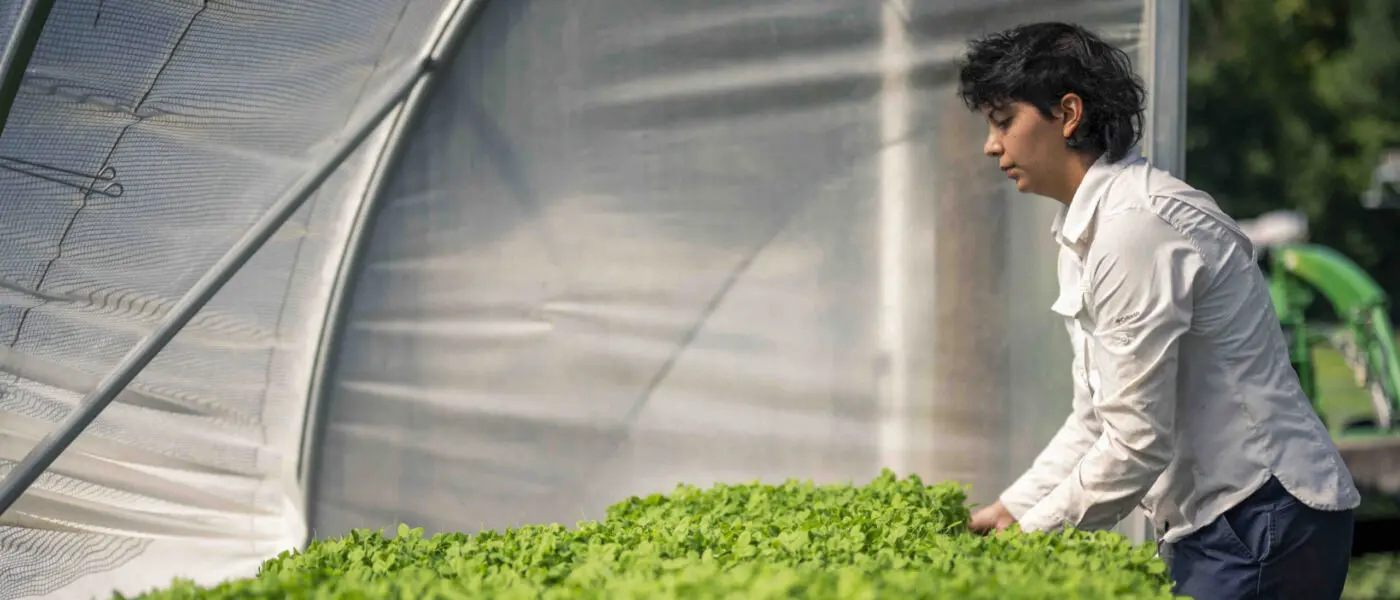
Today, Mike is the Farm and Conservation Director at Kinloch Farm, founded more than 200 years ago in 1823. The farm was purchased by the Currier family in 1960, with the third generation now involved. The family and its staff are committed to regenerative agriculture and holistic health for the farm, the family, the workers and the community. Kinloch Farm raises grassfed beef, honey and other locally grown foods that they sell directly to their community through their own retail operation. Covering more than 3,000 acres, the farm consists of protected and historic farmland in Virginia’s Piedmont featuring grasslands, savannas, riparian areas and wetlands. Kinloch’s grazing herd regenerates their land by improving soil microbiology, increasing water retention, storing carbon and promoting a diversity of forage. As important as the products of the farm are the native species diversity, wildlife and pollinator habitat, refuge and nesting ground for migratory grassland birds, health and vitality of its waterways, and carbon sequestration. Kinloch Farm works with research partners that include The Piedmont Environmental Council, Virginia Outdoors Foundation, Smithsonian Conservation Biology Institute, John Marshall Soil and Water Conservation District, and Virginia Working Landscapes.
Mike explains, “I oversee three main pillars of the farm: The farm and the beef, conservation and the retail operation. As director, my role is to make sure everyone has what they need. When I started, my first task was to change old policies and practices to get everything on the farm aligned with the commitment to grazing and conservation. I was also excited about the retail aspect because it involved establishing the brand and building the local market and support.”
As part of their commitment to the holistic health of the farm, the Currier Family is focused on quality of life for their staff. Staff receive salaries and benefits, including vacation and access to continuing education. They require a 40-hour work week–no one works more than that. “Some would say they’re overstaffed, but I’ve been part of systems that do not take employee well-being into account. Farms cannot be sustainable if you do it that way.”
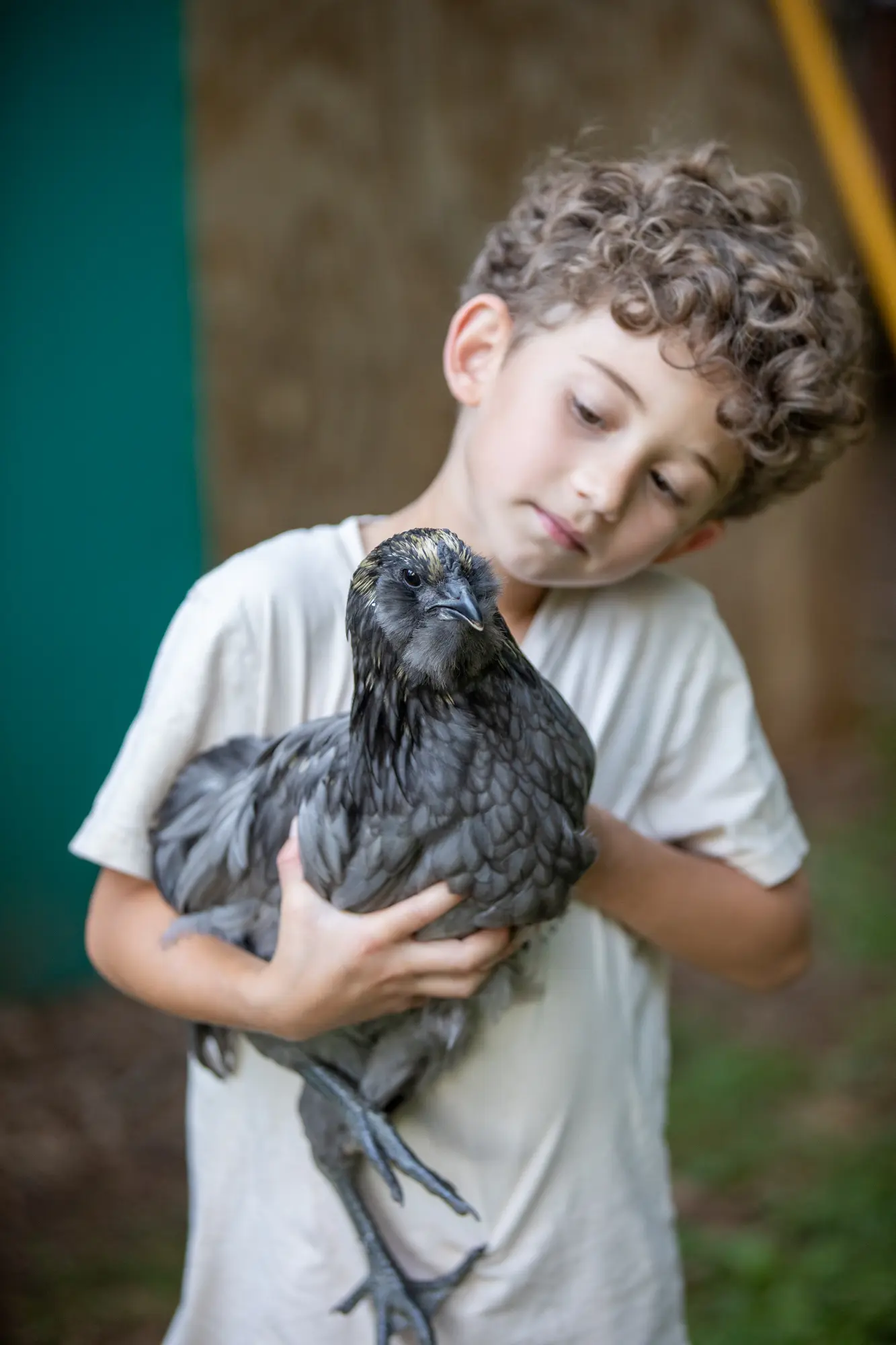
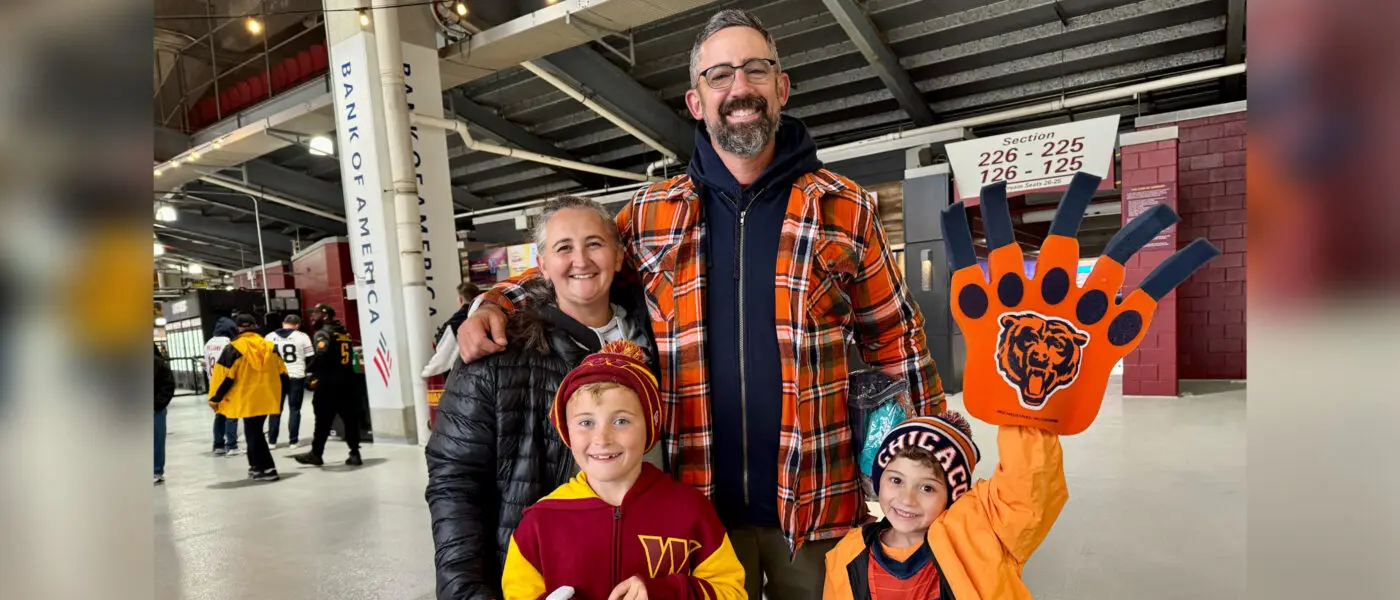
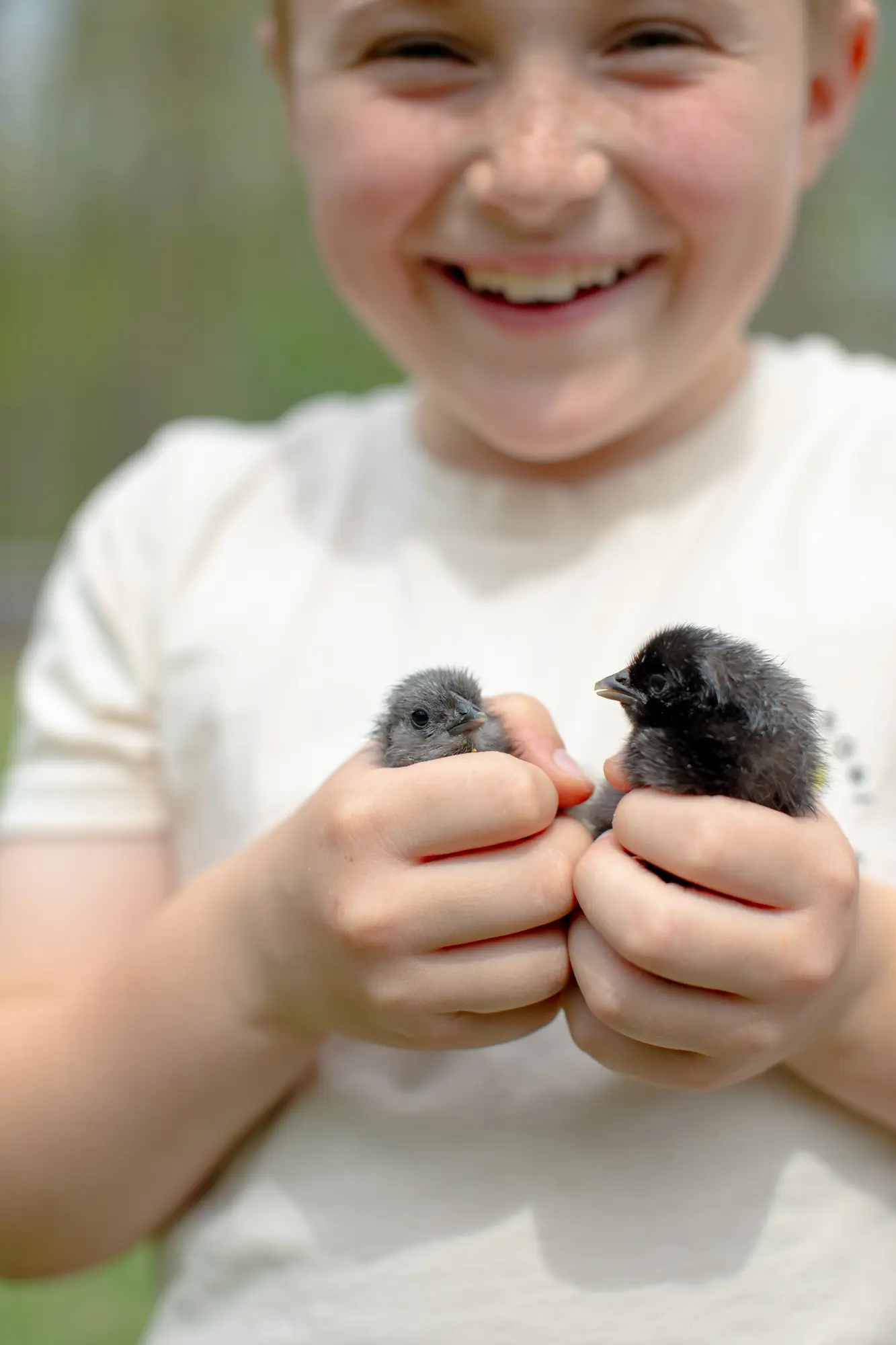
In addition to conservation, the Currier Family’s vision is for the farm to become more of a community resource. With Mike’s experience, they’re doing just that. “The boys are nearly ten and seven now, and even if they don’t go to the farm with me every day, they’re in nature and Molly is able to take their school curriculum outside. Yesterday, they helped me sort calves and they’re raising their own flock of chickens,” says Mike. Molly adds, “I’m grateful for what the boys and I can do together: the chickens have been a huge thing for them, they’re both involved in learning how to cook, bake and garden, and we’ve raised monarchs. They’re so observant of the nature around us and they’re so mindful with livestock.”
In other words, they’re growing up just like Mike and Molly dreamed when they first started their farm journey together.
Connect with the farm
- Learn more about Kinloch Farm on their website.
- Read our 2016 Farmer Hero profile of Molly and Mike Peterson.