Learn more about Against the Grain: The Farm Aid Podcast
 Against the Grain brings the magic of Farm Aid’s annual festival to listeners year-round. Hear from farmers and artists, advocates and food experts, activists and policymakers – all of whom are working towards building a more just and equitable farm and food system.
Click here to listen!
This year, Farm Aid’s annual festival took place in Virginia Beach, VA, a region known as Hampton Roads. The region is named for the body of water that connects the mouths of the Elizabeth, Nansemond and James Rivers, and includes the cities of Virginia Beach, Norfolk, Chesapeake and more. This area is famous for its history, as well as its military presence, including the world’s largest naval base. Virginia Beach has a reputation of being a great place for veterans to live and work, and for some, to farm!
Many veterans have a strong connection to the land, and farming can be therapeutic for those returning from combat. Military personnel and farmers share some core values, like resiliency, hard work, adaptability and a drive to do something for the greater good.
With the military and agriculture both being important to this year’s festival region, we took the opportunity to uplift farmer veterans in a dedicated space within the 2026 HOMEGROWN Village. Three organizations were represented: Protectors to Providers, the Farmer Veteran Coalition and The Veteran’s Farm of North Carolina. The latter group had the fantastic idea of celebrating farmer veterans through a series of photos representing them in their military uniforms and then in their farming clothes. These powerful photos were shown in both the HOMEGROWN Village and on the side screens on the main festival stage.
After the festival we reached out to learn more about these farmers! Below three farmer veterans share their stories and you can view the slideshow shown at Farm Aid 2026.
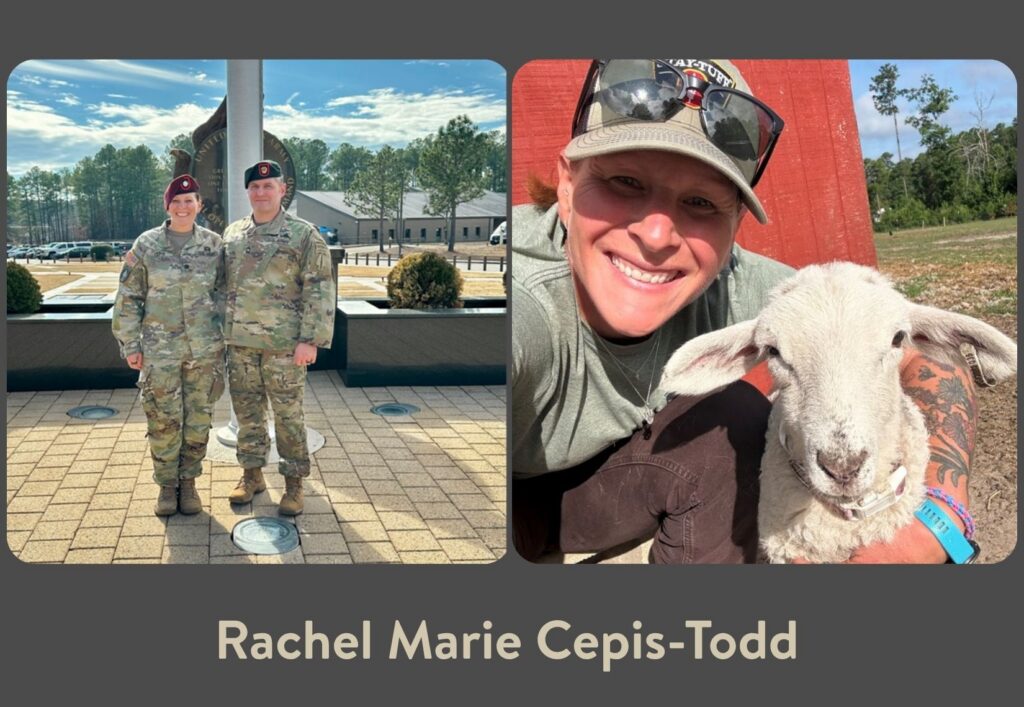
Rachel Marie Cepis-Todd – Served in the U.S. Army, Army Special Operations, for 20 years.
Click here to read about Rachel's experience transitioning out of serviceTell about how you are involved in agriculture?
I am the Assistant Farm Manager and Livestock Manager at the Veterans Farm of NC, in Cameron, NC. The Veteran’s Farm of North Carolina, Inc. (‘VFNC’) is designed and dedicated to educating veterans, transitioning active-duty personnel and their family members ages 18+ years on all aspects of agriculture. VFNC is dedicated to helping veterans transition into farming as a meaningful and self-sustaining career. Through extensive training and mentorship programs, we equip veterans with the skills and knowledge needed to become successful farmers.
Additionally, my husband and I own a farm, Revelation Acres in Shannon, NC. At Revelation Acres, we are committed to sustainable ranching practices that honor the land and support our community. Our mission is to provide high-quality beef while promoting animal welfare and environmentally friendly methods, including effective pasture prep that contributes to farm growth. We partner with the local 4H and FFA to mentor future agriculture leaders and producers.
How long have you been involved in agriculture?
I am a first generation farmer and only been actively involved in agriculture since retiring from the military, about a year ago.
How did you end up in the military and then in agriculture?
I couldn’t afford to pay for college and ROTC offered me a scholarship. I said: Four years in the military can’t be that bad and it will pay for college. 20 years later and I would do it all over again.
During the retirement transition I was unsure what I wanted to do next. I knew I wanted to do something with animals, outdoors and be my own boss. Agriculture was one of my internship options so I completed the Soldiers to Agriculture program and the VFNC program, which assisted me in narrowing down my goals. My husband and I now have our own farm and I am pursuing my dream of becoming a large animal veterinarian so that I can assist other farmers with their livestock vet-med needs.
What does being a farmer veteran mean to you?
Community. You always have buddies who are willing to support you and help out when you need it.
Would you suggest that other veterans follow your career path? Is there an inherent connection between farming and military experience?
Yes, I love the path I chose! The Army and Special Operations gave me the tools to overcome any challenge.
Absolutely there is a connection between farming and the military. Both careers are difficult and require hard work, grit and willingness to never quit. They have people who support each other and want each other to succeed. There is a certain amount of selflessness and definite love of country.
Tell us about your experience in the HOMEGROWN Village?
I had a wonderful experience at Farm Aid 2026, especially in the HOMEGROWN Village. I had the opportunity to talk with hundreds of festivalgoers about farming and my lamb Rose. I had the privilege of educating festivalgoers on aspects of farming and livestock. It was truly an amazing experience and I am blessed to have been included. Thank you!
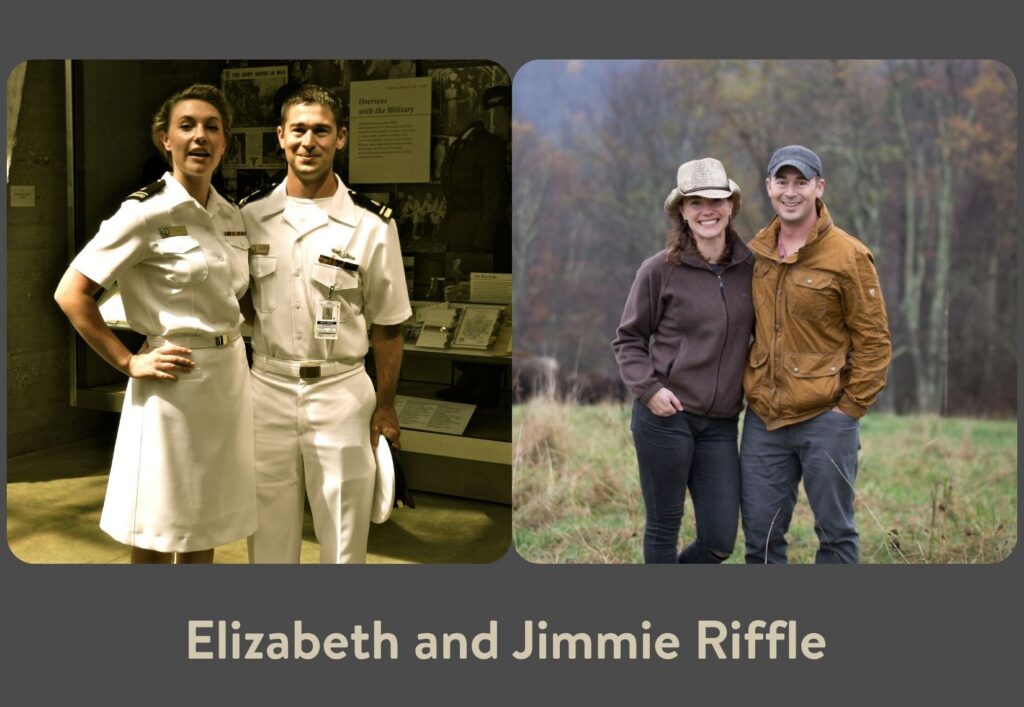
Elizabeth (Liz) Riffle – Served six years as an officer in the U.S. Navy Nurse Corps
Click here to learn about Liz Riffle and the bison hotdogs that she served at Farm Aid 2026!How are you involved in agriculture?
I own and operate Riffle Farms, a grass-fed bison operation in Terra Alta, West Virginia. We focus on regenerative agriculture, holistic land management and raising high-quality bison meat. I also own Riffle Farms Market & Co-op in Norfolk, VA, where we connect consumers directly with local and regional producers.
Beyond my own operations, I serve as President of the Eastern Bison Association, on the boards of the National Bison Association and Farmer Veteran Coalition, and as an educator in regenerative agriculture.
How long have you been involved in agriculture?
I grew up with a love for animals, horses and the outdoors, but my professional journey into agriculture began when we established Riffle Farms. What started as an interest in raising a healthier red meat through bison, has evolved into a much larger commitment to land stewardship, livestock production, agricultural education and supporting other producers.
How did you end up in the military and then in agriculture?
I joined the Navy as a nurse, drawn to service, leadership and the opportunity to do something meaningful. My military career taught me a great deal about responsibility, adaptability and working through difficult situations—where life was often on the line.
Agriculture came back into my life while I was active duty as a place of respite. I turned back to my love of horses and volunteered at rescues at every duty station. I wanted to create something that would also connect our family to the land and give our children an opportunity to grow up immersed in the natural world. That was where I felt at peace and wanted to raise them in that environment.
I certainly didn’t anticipate becoming a bison producer, meat marketer, retail store owner and agricultural advocate! But farming has a way of opening doors you never expected!
What does being a farmer veteran mean to you?
To me, being a farmer veteran means continuing a life of service, just in a different capacity. Instead of serving patients and fellow service members, I’m serving my land, my animals, my customers and my agricultural community.
It also means recognizing that the skills we develop in the military have tremendous value outside of uniform. Agriculture needs leadership, resilience, creative problem-solving and people who are willing to take responsibility for something bigger than themselves. But it also means having the humility to recognize that farming requires an entirely new education. Military service doesn’t automatically make someone a good farmer. You have to be willing to learn.
Would you suggest that other veterans follow your career path? Is there an inherent connection between farming and military experience?
Absolutely, but with a healthy dose of reality!
I think there is a natural connection between military service and agriculture. Both require discipline, adaptability, leadership and the ability to make decisions when circumstances are far from ideal. Both also provide a sense of purpose that can be difficult to replace.
However, I always encourage veterans to approach agriculture as a business, not simply as a lifestyle or an escape from their previous career. Farming can be incredibly rewarding, but it can also be financially, physically and emotionally demanding. The most important advice I would give another veteran is to find experienced mentors, understand the economics of their operation and build a business that supports the life they actually want to live.
Tell us about your Farm Aid 2026 experience.
I had the opportunity to attend Farm Aid 2026. I spent my time in the Hi-Fi Experience area serving bison hotdogs. It was wonderful to be part of an event that brings national attention to family farmers and the challenges facing American agriculture. I appreciate opportunities that bring agriculture into the broader public conversation and highlight the importance of supporting the people who produce our food.
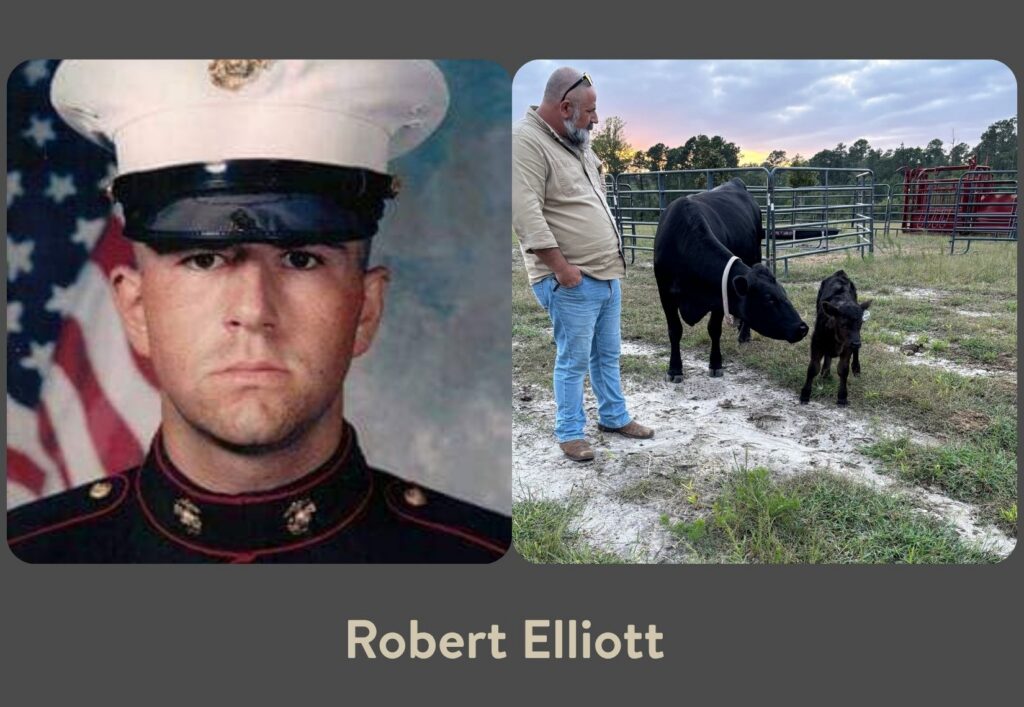
Robert Elliott – Joined the Marine Corp at 18 and was honorably discharged in 2002. Robert continued to work for the Marines as a contractor from 2002-2011 after which he returned to the farm.
Read our Farmer Hero story about Robert Elliott